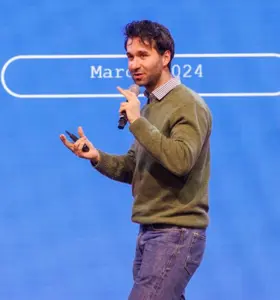
Linda Leopold
Named one of Forbes’ top women in AI, Linda empowers leaders to turn responsible AI into a competitive advantage.
Photo: Evelina Carborn
Photo: Evelina Carborn
Named one of Forbes’ top women in AI, Linda empowers leaders to turn responsible AI into a competitive advantage.
In a world rushing to adopt AI, Linda Leopold takes a step back to ask the deeper questions: What does it mean to be human in an age of artificial intelligence? How do we make human-AI collaboration successful? Her work sits at the fascinating intersection where technology meets humanity.
Named one of nine ”inspirational women leaders in AI shaping the 21st century” by Forbes, Linda Leopold brings strategic vision and hands-on implementation experience to AI challenges.
For seven years, she held senior leadership positions in AI policy and strategy at global fashion retailer H&M Group, where she established the company’s Responsible AI program and led initiatives in digital ethics and generative AI. Her experience reinforced her belief that responsible innovation and business success aren’t just compatible – they’re inseparable.
Her journey began a decade ago when she left her successful media career to dive into the emerging world of artificial intelligence, driven by a compelling question: Could AI be the key to better understanding ourselves?
This wasn’t mere curiosity – Linda Leopold had just authored a book on human intelligence and recognized that deep learning, the branch of AI inspired by the human brain, would fundamentally reshape how we work, think, and collaborate. She wanted to be part of shaping that future rather than simply witnessing it.
Today, as a strategic advisor and keynote speaker, Linda Leopold helps organizations navigate the complex intersection of human potential and artificial intelligence. She serves as a regular contributor to MIT Sloan Management Review’s expert panel on Responsible AI and advises leaders on AI strategy, transformation, and responsible technology adoption.
In her keynotes, Linda Leopold reveals how understanding our relationship with AI becomes essential for successful implementation and responsible use. Whether you’re struggling with AI adoption or seeking to understand the future of human-AI collaboration, she provides practical guidance for building AI strategies that amplify human strengths.
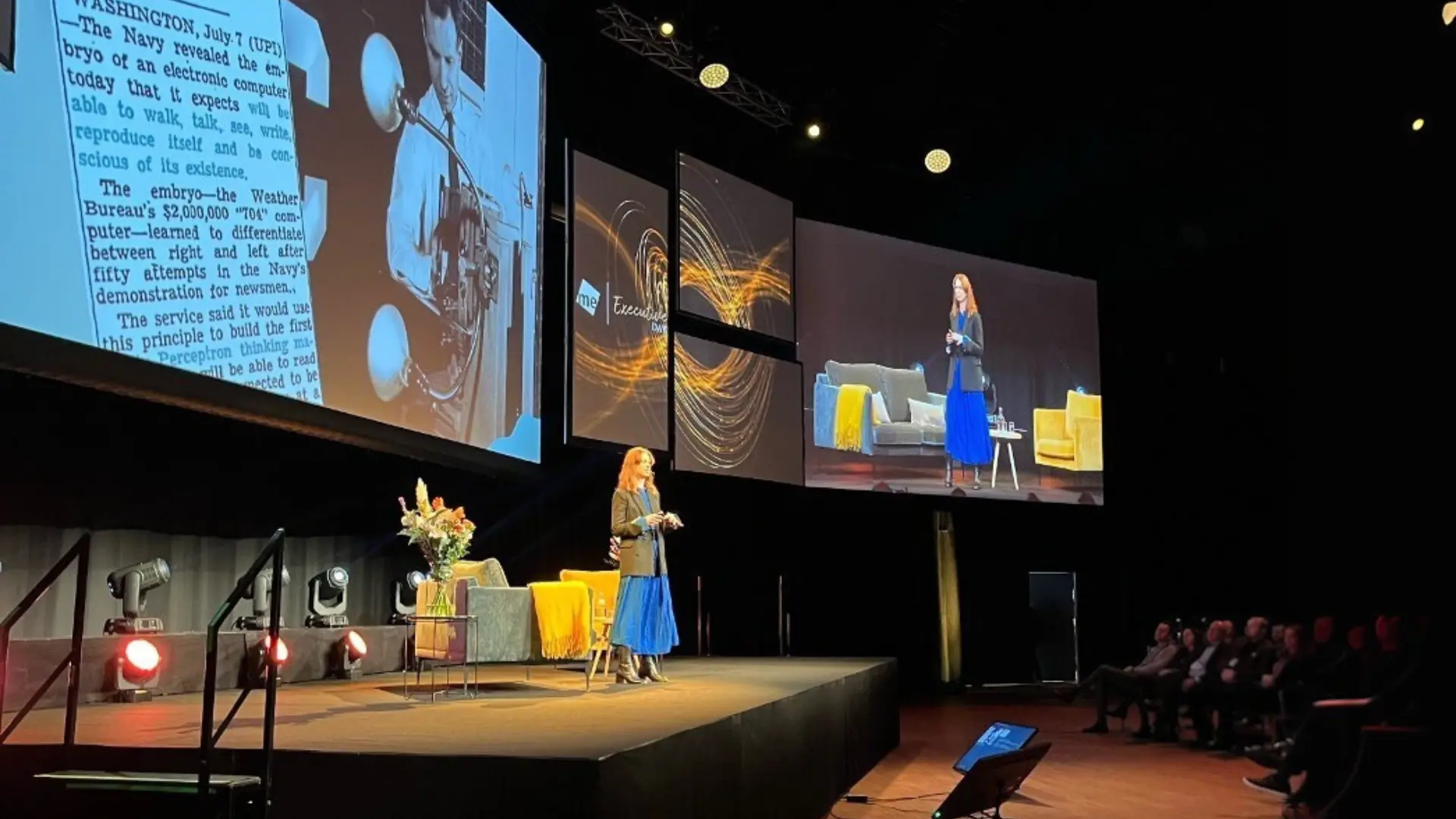
Keynote by Linda Leopold:
While companies are busy rolling out AI tools and strategies, employees and customers are forming their own relationships with AI – relationships most leaders don’t see. Drawing on global research, new behavioral patterns, and her own experience operationalizing AI at scale, Linda Leopold shows why AI success has more to do with people than technology.
AI adoption is happening faster than any technology in history, but not always in the way executives expect. Employees use unauthorized AI tools at work. Customers are bonding with chatbots. At the same time, many companies struggle to capture value from AI – often because they overlook the human dimension.
Through compelling storytelling combined with the latest data, Linda explores three patterns shaping AI adoption today:
This keynote challenges leaders to think like anthropologists – observing how people actually relate to AI – and translate those insights into smarter strategies.
Audiences walk away with:
Keynote by Linda Leopold:
Responsible AI has moved from nice-to-have to board-level priority. But what does it look like in practice? Drawing from seven years of implementing Responsible AI at scale, Linda Leopold reveals what makes it work – and why policies alone will never be enough.
The challenge sounds simple: doing AI ethically and responsibly. Yet the execution is anything but. From biased algorithms and hallucinating chatbots to workforce disruption and AI’s environmental impact – the complexity can be paralyzing. Many organizations respond with impressive frameworks but struggle to translate them into action.
Through real-world examples – including how creative approaches like storytelling and ethical dilemmas can make AI ethics tangible – Linda reveals a critical insight: successful Responsible AI requires reaching both brains and hearts. You need governance structures and cultural transformation working together.
The keynote explores:
Audiences walk away with:
Keynote by Linda Leopold:
This session is for leaders navigating AI transformation. (In other words: ALL leaders today.)
You may not think of yourself as an “AI leader” – but if you are leading people through this shift, Linda Leopold argues you already are. And it comes with challenges unlike any leadership context before.
AI is not like other technological shifts. The pace is faster, the stakes are higher, and the emotional reactions stronger. Linda paints a clear picture of the forces shaping AI development and adoption today, and what they mean for leaders specifically.
The session covers two areas:
Participants leave with a sharper understanding of what AI-era leadership demands, and both the mindset and the methods for leading others through the transition and applying AI in your own leadership.