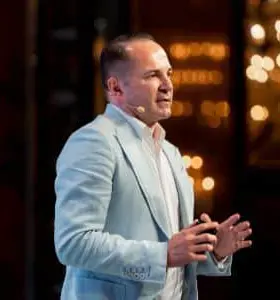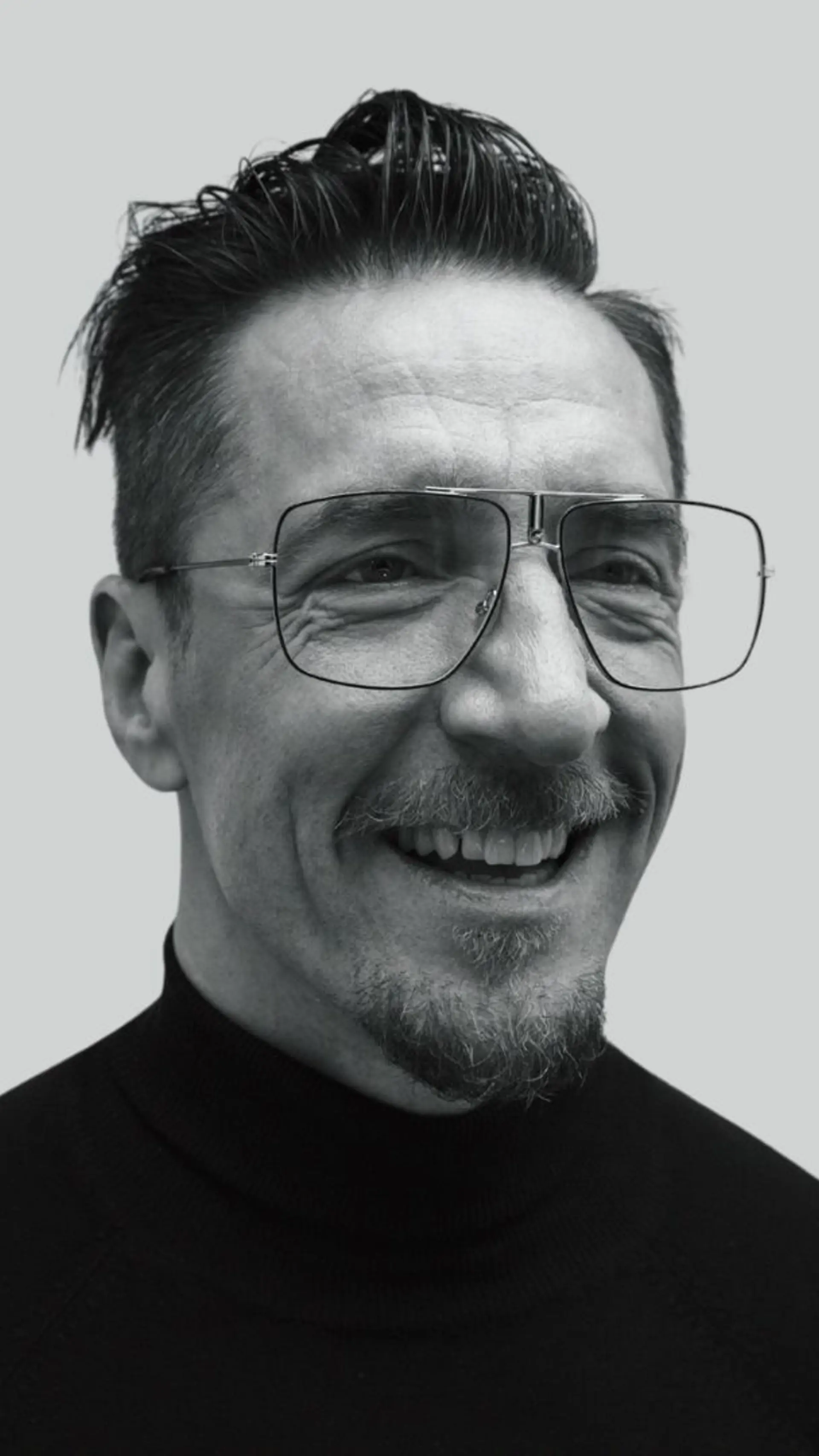
Henri Hyppönen
Henri Hyppönen explores how AI reshapes creativity, leadership, and what it means to be human in a rapidly changing world.
Henri Hyppönen explores how AI reshapes creativity, leadership, and what it means to be human in a rapidly changing world.
Henri Hyppönen is an author, serial entrepreneur, and concept architect working at the intersection of creativity, technology, and strategy. As Global Head of Innovation at Younite AI, he helps organizations make sense of how artificial intelligence reshapes not just tools, but the environments and systems people operate within. His keynotes challenge audiences to rethink assumptions about leadership, creativity, and human potential in a world where intelligence is no longer exclusively human.

Keynote by Henri Hyppönen:
Leadership and creativity in a world of zero latency
Artificial intelligence is often discussed as a new tool. However, the deeper shift is that AI is rapidly becoming the environment in which work happens.
Ideas move from concept to execution with unprecedented speed. Creative processes accelerate. Entire “idea markets” emerge where human and machine intelligence interact continuously.
Drawing on concepts he has developed, including Zero Latency, creative latency, and PreGen (predictive generation), Henri explores how this new environment reshapes leadership, creativity, and organizational design.
Rather than predicting technological futures, this keynote focuses on a more urgent question:
What happens to human judgment, responsibility, agency and creativity when intelligence itself becomes infrastructure?
Keynote by Henri Hyppönen:
Why organizations lose their advantage when they narrow what counts as “normal”
For decades organizations have tried to optimize performance by defining clear norms: how people should think, communicate, and work.
But in an increasingly complex world, competitive advantage often comes from human variation rather than conformity.
In this keynote, Henri reframes neurodiversity not as an inclusion issue but as a stress test for organizations. By examining how systems respond to real cognitive diversity, he reveals why many organizations unintentionally eliminate the very differences that enable new thinking, adaptability, and breakthrough ideas.
The human edge, he argues, lies not in efficiency but in the ability to work with variation without losing coherence.
Keynote by Henri Hyppönen:
Why the most important leadership skill is recognizing problems before they have names
Most leadership frameworks focus on solutions: strategy, execution, and innovation.
But leadership begins earlier: with recognizing problems that have not yet been clearly defined.
In times of rapid technological and societal transition, organizations often become extremely good at solving yesterday’s problems, while the most important opportunities remain hidden inside challenges that no one has learned to see.
Drawing on philosophy, systems thinking, and contemporary organizational life, Henri explores how leaders can develop the capacity to identify emerging problems before they become crises, and how recognizing them early can turn uncertainty into strategic advantage.