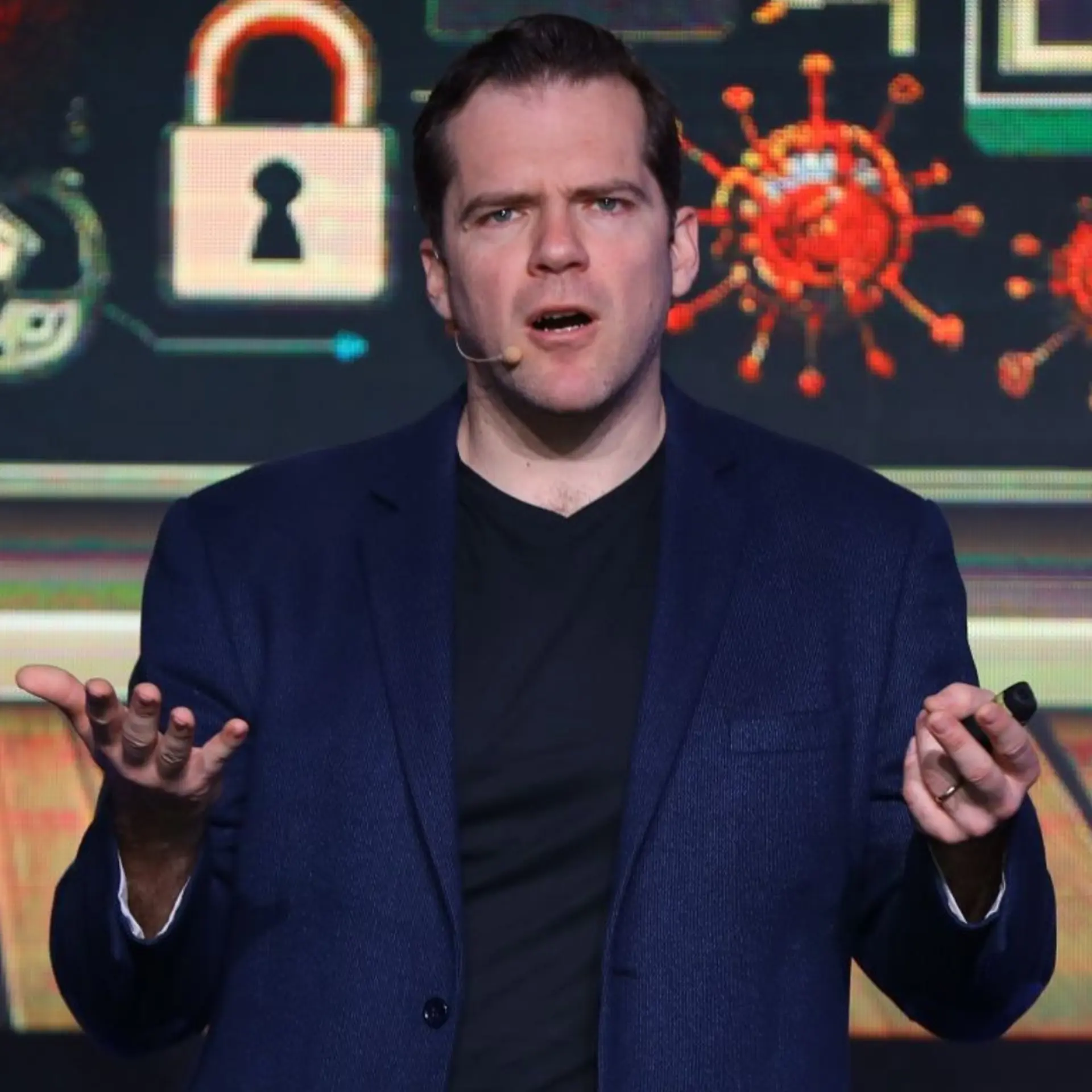
Hacking refers to gaining access to digital systems, networks, devices, or data, often by exploiting technical weaknesses or human behavior. While hacking can be malicious, it can also be ethical when used to identify vulnerabilities and strengthen security.
The topic is relevant because organizations depend on digital systems for communication, operations, customer trust, and growth. As cyberattacks become more sophisticated, understanding hacking helps businesses reduce risk, protect sensitive information, and prepare employees to recognize threats. A keynote on hacking can turn a complex topic into practical awareness and action.
Which topics do our keynotes on Hacking cover?
Our keynotes on hacking explore the technical, human, and strategic sides of cybersecurity. The topics below show how organizations can understand cyber threats, strengthen defenses, and build a more security-aware culture:
Social engineering and the human side of hacking
Many cyberattacks succeed because attackers understand people as well as technology. Social engineering uses trust, urgency, and manipulation to make employees reveal information or take unsafe actions. A keynote on this topic can show how human behavior becomes a security risk, with insights from Rachel Tobac. The focus is on helping teams recognize manipulation and make safer decisions.
Ethical hacking and finding vulnerabilities first
Ethical hacking helps organizations discover weaknesses before criminals can exploit them. By thinking like an attacker, businesses can test systems, improve processes, and strengthen cyber resilience. A keynote on this topic explores how offensive security can become a practical defense strategy through perspectives from Ted Harrington. The goal is to make security more proactive, realistic, and effective.
Cybercrime and real-world attack methods
Cybercrime is constantly evolving, and attackers use increasingly creative methods to target organizations. Understanding how breaches happen can help leaders take more informed decisions about security priorities. A keynote on this topic can make cyber threats concrete and memorable through insights from Bryan Seely. The emphasis is on learning from real hacking cases to reduce future risk.
Data breaches and digital trust
When data is exposed, the consequences can include financial loss, reputational damage, and reduced customer confidence. Organizations need to understand how breaches occur and how to respond effectively. A keynote on this topic explores the realities of leaked credentials and online exposure through insights from Troy Hunt. The focus is on protecting data and maintaining digital trust.
Cyber warfare and emerging digital threats
Hacking increasingly affects governments, critical infrastructure, and global business operations. Nation-state attacks, AI-enabled threats, and digital warfare create new challenges for leaders and security teams. A keynote on this topic can help audiences understand the broader threat landscape through perspectives from Laura Galante. The goal is to prepare organizations for the strategic risks of an interconnected world.
Benefits of a keynote on Hacking
A keynote on hacking helps organizations understand cybersecurity risks in a clear, engaging, and practical way. Participants gain insight into social engineering, cybercrime, data breaches, ethical hacking, and the behaviors that can either increase or reduce digital risk.
These keynotes can strengthen awareness across teams, support better decision-making, and help leaders prioritize cybersecurity as a shared responsibility. By understanding how hackers think and operate, organizations can improve preparedness, protect sensitive data, and build stronger digital trust.
Other relevant keynotes within Hacking
Related topics include Cyber Security, Cybercrime, Dark Web, Digital Transformation, Artificial Intelligence, Technology, and Risk Management. These topics expand on the digital risks, technologies, and leadership decisions that shape modern security. Together, they give organizations a broader foundation for protecting people, systems, and trust.
Contact us today and let us help you find the keynote that best matches your audience and objectives.
How to Book a Speaker
Booking a speaker with A-Speakers is a simple and tailored process that ensures your event receives the perfect angle on the topic. Start by sharing your needs with us, such as event type, preferred speaker, and budget, via email or phone. We then match your requirements with the competencies of our experts and present the ideal candidate for your audience. Once the details are agreed upon, we draw up a contract and collaborate on the further planning to ensure a successful execution. After the keynote has taken place, we of course follow up and evaluate your satisfaction. Book your speaker today.
- Tell us your wishes and needs: Give us a short description of your event, and feel free to include your wishes for a topic or specific speaker, so we can advise you in the best way possible.
- Get a tailored recommendation: Our skilled speaker consultants base their suggestions on your needs and help you choose the speaker that best matches your criteria and budget.
- Formalize the agreement: Once we've found the perfect speaker for your event, we prepare a contract that both parties sign.
- Planning and execution: We support you all the way and coordinate the details together to make the event a successful experience.
- Follow-up and evaluation: After the keynote, we naturally follow up to see if the event lived up to expectations.
Contact us today to find the speaker that matches your needs and vision. Book a speaker now and take the next step toward a stronger future.