Performing When It Matters Most
What years on the frontline as a police officer taught me about making better decisions, sustaining high performance, and leading through change, without burning out in the process.
What years on the frontline as a police officer taught me about making better decisions, sustaining high performance, and leading through change, without burning out in the process.
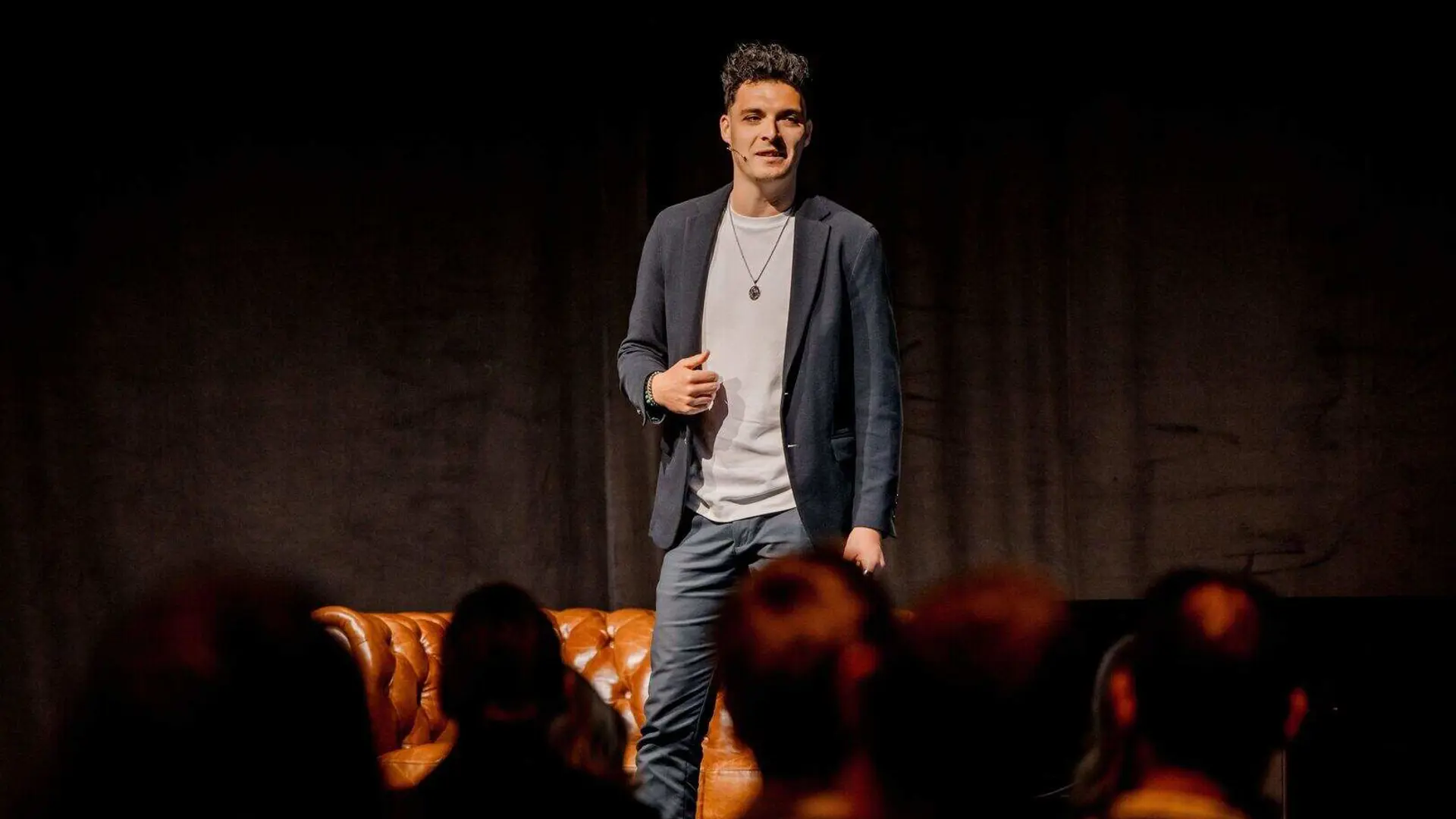
Most conversations about high performance focus on the conditions of success: the right environment, the right strategy, the right team. What they rarely address is the harder question, what happens to performance when the conditions are anything but right?
That question isn't academic for me. It's operational. Years working as a frontline police officer meant making consequential decisions under acute stress, with incomplete information, inside systems that were constantly changing. It meant performing, genuinely performing, when everything around you was uncertain.
The lessons from that environment have shaped how I think about leadership, decision-making, and sustainable high performance in every context since. Here is what I know to be true.
The most capable officers I worked alongside weren't exceptional because they were fearless. They were exceptional because they had trained their responses to the point where pressure activated a system, not a panic. They performed well despite the stress as their preparation meant that stress became a signal to engage the right processes rather than abandon them.
This is the first truth about sustainable high performance: it is built in the quiet moments, not discovered in the critical ones. Consistent standards, honest debrief, deliberate practice under realistic conditions, these are what create the capacity to perform when it counts. You cannot improvise your way to excellence in a crisis. You execute what you've already internalised.
"The best performers I've worked with don't rise to the occasion. They fall back on their preparation, and their preparation is exceptional."
Under genuine pressure, cognitive load spikes. Working memory narrows. The instinct is to think harder, to force your way to a better answer through sheer mental effort. This is almost always the wrong move.
What actually works is thinking more simply. The officers who made the best decisions in complex, time-critical situations had reduced their decision-making to a short hierarchy: What is the immediate priority? What do I know for certain? What is my next action? That simplicity wasn't a shortcut, instead it was the product of deeply held principles that had been tested and refined over time.
For leaders operating through change and uncertainty, the same principle applies. When process breaks down, and it will, the only reliable compass is a clear set of values you've genuinely interrogated. What are we actually trying to achieve? What would the best version of this look like? These aren't soft questions. They're the hardest ones, and the most important ones to have already answered before the pressure arrives.
One of the most consistent patterns I observed in operational policing was capable, committed people degrading over time, not because the work exceeded their talent, but because nobody had built recovery into the system. Resilience was treated as a fixed quantity you either had or didn't, rather than a resource that needed active replenishment.
Sustainable high performance has a rhythm: intensity and recovery, challenge and consolidation. The adaptation, cognitive, emotional, physical, happens in the recovery phase. Without it, exposure to pressure doesn't build resilience. It accumulates as damage.
For individuals and organisations serious about long-term performance, this means treating recovery as structural, not optional. Debrief as standard. Rest as discipline. Reflection as a professional skill, not a luxury. The organisations that produce the most consistent performers don't simply push hardest. They recover best.
Four principles I apply in practice
1. Regulate before you respond
Controlled breathing is a physiological intervention. A deliberate pause, even two seconds, creates the space between stimulus and response where quality decisions live. Train it before you need it.
2. Triage your attention ruthlessly
Not everything in a complex situation deserves your best thinking. Identify the immediate priority, delegate what can be delegated, and consciously protect the bandwidth that high-quality decision-making requires.
3. Debrief honestly, every time
The experience is not where the growth lives, the reflection on it is. What happened? What worked? What wouldn't I repeat? Without this habit, you accumulate experience without developing from it.
4. Know your own warning signs
High performers in pressure environments learn to read themselves as clearly as they read a situation. Identifying your early signals, irritability, withdrawal, narrowed thinking, allows intervention before full degradation.
Policing exists in a state of near-constant organisational change. Most sectors do now. What distinguishes those who perform through it is a specific quality: they hold their values tightly and their methods loosely. They know what they stand for, and they are willing to adapt everything else around it.
The people who struggle most with change have often confused the method for the meaning. When the method is threatened, it feels existential, because it has become their identity, rather than simply a tool in service of something deeper. Clarity about purpose is not a philosophical luxury in high-change environments. It is the anchor that makes adaptation possible without losing direction.
"The conditions will rarely be ideal. The question is whether your preparation, your principles, and your recovery habits are strong enough to perform anyway."

Booking and request
Send a booking request here for Rob Hosking
Did you find the blog post inspiring? You can book Rob Hosking for your event. Contact us today to learn more about the possibilities.