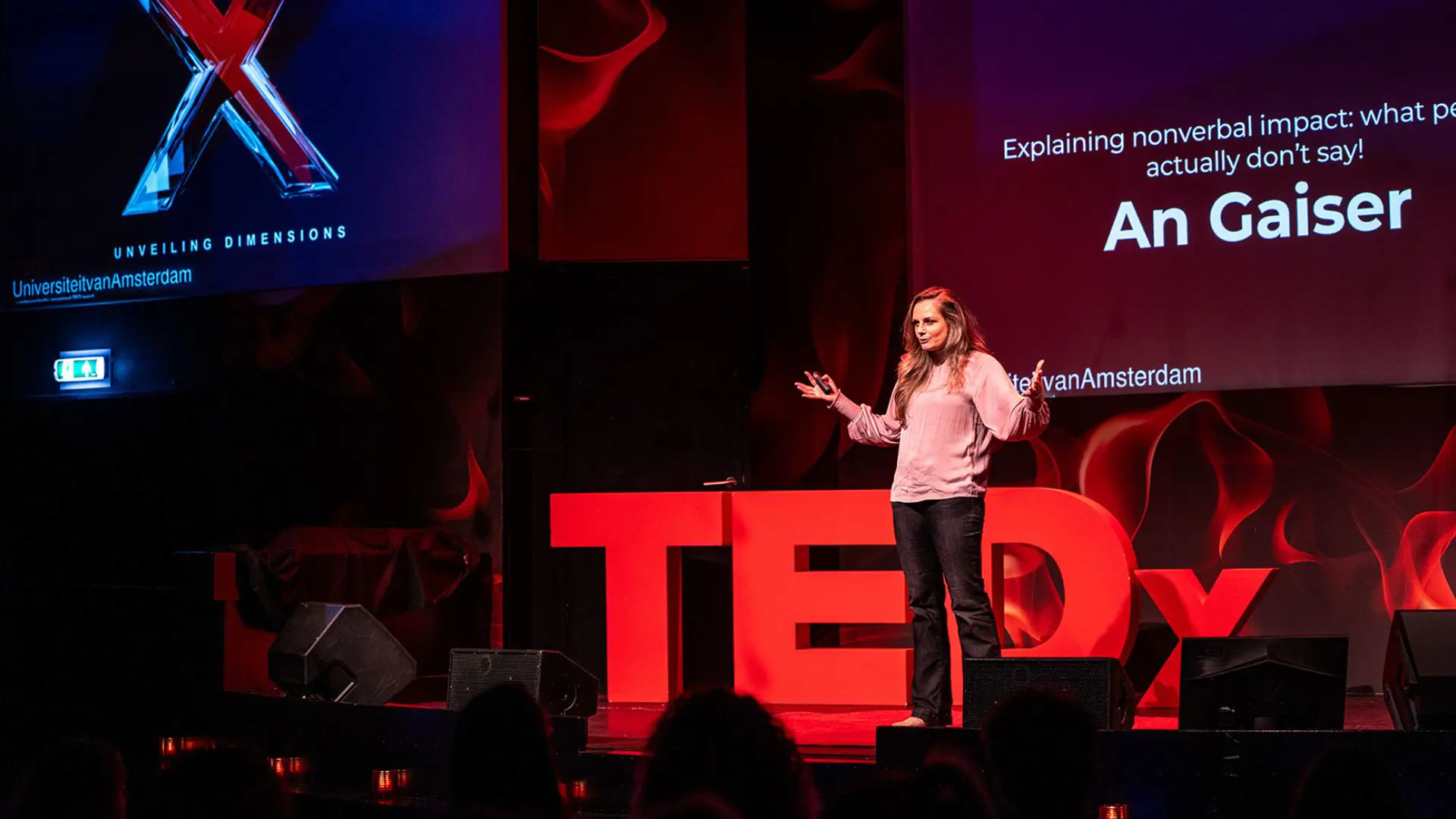
An Gaiser and high-stakes behavioral insight
An Gaiser’s work centers on understanding human behavior when pressure increases and clarity decreases. As a forensic behavioral expert and investigative interviewer, she supports professionals who must make sound decisions while navigating resistance, incomplete information, and subtle shifts in group dynamics. Her approach is grounded in real operational experience rather than theory alone, making her insights practical and directly applicable to complex professional environments.
Earlier in her career, An worked within Dutch government environments, including roles connected to national security and integrity-related investigations. These settings shaped her understanding of how risk emerges in conversations long before it becomes visible on paper. Over time, she specialized in behavioral analysis and interview strategy, focusing on how stress, power, and context influence what people say, avoid, or signal nonverbally.
Field experience across security and governance
An has trained and worked with professionals operating in security, integrity, and investigative domains. Her assignments include work related to counterterrorism interviewing and collaboration with international armed forces. In these environments, mistakes are costly and overconfidence can be dangerous. This experience sharpened her ability to recognize behavioral patterns under pressure and to teach others how to remain observant, calibrated, and professionally self-aware.
She has also delivered training for the National Center for Credibility Assessment (NCCA) in the United States. Her focus areas include nonverbal behavior, interview strategy, and professional self-awareness in high-risk conversations. This combination of behavioral science and operational realism forms the backbone of her speaking and advisory work today.
The GIN Method: a practical framework
Building on her field experience, An developed the GIN Method, a practical framework integrating behavioral analysis, interaction skills, and nonverbal intelligence. The method is designed for environments where checklists fail and fast conclusions increase risk. Instead of promising certainty, it trains professionals to think in scenarios, adjust in real time, and recognize how their own behavior influences what becomes visible in the room.
The GIN Method helps professionals slow down without losing momentum. It sharpens observation, strengthens judgment, and supports better decisions in situations where pressure, hierarchy, or urgency might otherwise narrow perspective.
Translating forensic expertise to leadership
In recent years, An has translated her specialist knowledge from high-risk operational domains to a broader professional audience. She works with leaders, boards, compliance teams, and organizations operating in complex governance contexts. This translation is central to her impact as a keynote speaker: audiences recognize the relevance of her insights even when their daily environment is far removed from security or investigative work.
Her sessions explore how psychological safety erodes, how misalignment develops, and how silence can signal risk. Participants learn to identify these dynamics early and to respond in ways that preserve clarity, authority, and trust.
Key themes in An Gaiser’s keynotes
Reading behavior under pressure and uncertainty
Managing resistance and avoidance in professional conversations
Understanding nonverbal signals and interaction dynamics
Strengthening professional self-awareness in decision-making
These themes are delivered through concrete examples, sharp observation, and practical reflection, making her keynotes engaging and applicable across sectors.
Book An Gaiser for your event
An Gaiser is the author of Verborgen Signalen (Hidden Signals: The Art of Timing and Influence in Conversations). She regularly delivers advisory work, international keynotes, masterclasses, and training programs for organizations facing complex human and organizational risk.
When you book An Gaiser for your event, you bring forensic behavioral insight into leadership and governance conversations where what remains unsaid often matters most.