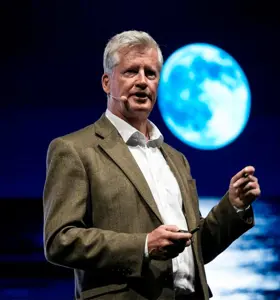
Richard Foster-Fletcher
Richard Foster-Fletcher reveals how AI actually behaves—and what that means for organisations, judgement, and the information they depend on.
Richard Foster-Fletcher reveals how AI actually behaves—and what that means for organisations, judgement, and the information they depend on.
Richard Foster-Fletcher tracks what AI systems actually do once they move from demos into daily organisational use. His work moves beyond theory, focusing on behaviour: how foundation models respond under pressure, how reasoning architectures perform in practice, and how vendor narratives often differ from reality. He connects these findings directly to organisations—how decisions change, how judgement shifts, and how the information businesses rely on begins to evolve. With a clear, research-driven perspective, he equips leaders to see AI not as a promise, but as an active force already reshaping their operations.
Richard Foster-Fletcher is focused on one central question: what happens when AI systems meet the real world of organisations. While much of the conversation around AI stays at the level of capability or speculation, his work follows the technology into daily use—where systems interact with people, processes, and decisions.
He examines AI across its full stack, from foundation models and reasoning architectures to humanoid robotics and vendor strategy. This allows him to map not just what AI can do, but how it behaves under real conditions—and where expectations diverge from outcomes. His insights are grounded in observation and research, offering a clear view of how AI is already influencing organisational structures and performance.
One of Richard’s core speaking territories is the direction of AI capability. He highlights where systems are improving, where limitations remain, and where vendors tend to underplay risks or overstate readiness. Rather than relying on roadmaps or marketing narratives, he draws on observed system behaviour to explain what organisations should realistically expect.
This includes how foundation models respond to ambiguity, how reasoning systems handle complexity, and how emerging technologies such as robotics integrate into operational environments. His perspective helps leaders prepare for what is coming next—without relying on assumptions that may not hold in practice.
A second key focus is the effect of AI on professional judgement and workforce capability. As AI tools become embedded in everyday workflows, they begin to influence how decisions are made, how expertise is applied, and how accountability is understood.
Richard explores how reliance on AI can shift judgement over time—sometimes subtly, sometimes significantly. He looks at how professionals interact with AI-generated outputs, how trust is formed, and how capability evolves when systems take on cognitive tasks that were previously human-led. This creates a more grounded understanding of what AI means for expertise, not as a concept, but as a lived organisational change.
The third territory Richard addresses is what happens to information once AI enters its production chain. As organisations increasingly use AI to generate, edit, and structure content, the nature of that information begins to change.
His research has identified measurable shifts, including a recent empirical study showing that editorial drift in US corporate filings accelerated by 25 per cent during the period when enterprise AI tools became widely available. Notably, none of the companies in the dataset disclosed AI use in preparing those filings. This raises important questions about transparency, accuracy, and the long-term reliability of institutional information.
Richard is Chair of MKAI, a research archive dedicated to publishing evidence on AI’s institutional effects, and founder of Reality & Reason. His work has led to the identification of seven named Structural Dynamics that shape how enterprises adopt and adapt to AI.
These dynamics describe recurring patterns seen across organisations as AI becomes embedded in operations. They provide a framework for understanding not just isolated changes, but the broader structural shifts that occur when AI is introduced at scale. This makes his work especially relevant for leaders navigating transformation, governance, and long-term strategy.
Alongside his research and speaking, Richard publishes What Still Matters, a weekly essay exploring what AI is doing to organisations in real time. With over 6,000 subscribers, the publication reflects ongoing analysis of how AI continues to reshape work, decision-making, and institutional behaviour.
His writing and talks share the same focus: clarity over hype, observation over assumption, and practical understanding over abstract theory. Audiences leave with a sharper view of how AI is already affecting their organisation—and what to pay attention to next.
Richard Foster-Fletcher is a speaker for organisations that want to understand AI beyond the surface level. His sessions bring together technical awareness, organisational insight, and original research, making complex developments accessible without oversimplifying them.
He speaks to leaders, decision-makers, and professionals who need to understand how AI changes the systems they rely on. Whether the focus is strategy, governance, workforce capability, or information integrity, his perspective provides a grounded and relevant lens on one of the most important shifts organisations are facing today.
Keynote by Richard Foster-Fletcher:
For technology conferences, leadership summits, and annual events.
Foundation models reason by predicting the next token. They cannot revise a chain of thought after the fact. Humanoid robotics is moving from lab to production. Vendor strategies are shifting underneath contracts signed twelve months ago.
Richard Foster-Fletcher shows where capability is genuinely heading, where the claims diverge from operational reality, and what breaks when organisations build strategy on assumed rather than actual capability.
He covers model behaviour, reasoning limits, robotics timelines, and vendor strategy, then traces what these shifts change once AI is embedded in how work is produced and decisions are formed.
Keynote by Richard Foster-Fletcher:
For leadership summits, executive offsites, and HR and talent events.
When professionals outsource first drafts to AI, their own judgement weakens. They become verifiers. The thinking migrates to the machine. The institution cannot hold what the individual learns once AI mediates the work.
Richard Foster-Fletcher has named and documented these patterns across industries, including Human Middleware, the One Player Game, and Brittlement.
He shows what is happening to reasoning, skill, and professional confidence once AI is part of how work is done.
Keynote by Richard Foster-Fletcher:
For board audiences, risk conferences, and governance events.
Documents that carry human signatures now contain reasoning that originated in machine output. Formal reports become smoother, less specific, and harder to challenge.
The production chain behind management information is no longer fully visible. Richard Foster-Fletcher’s research found this shift accelerating across 150 corporate filings.
He traces what is happening to organisational knowledge, formal records, and decision-making when AI enters the process behind the information senior leaders are asked to trust. The paperwork still looks right, but something underneath it has moved.