Non-binding request for Greg Orme
Greg Orme
Greg Orme helps leaders navigate uncertainty, make better decisions, and lead confidently when the old playbooks no longer work.
Prefer to talk? Call +1 347 223 5128
5.00 of 5
Top rated!
Greg Orme helps leaders navigate uncertainty, make better decisions, and lead confidently when the old playbooks no longer work.
Prefer to talk? Call +1 347 223 5128
5.00 of 5
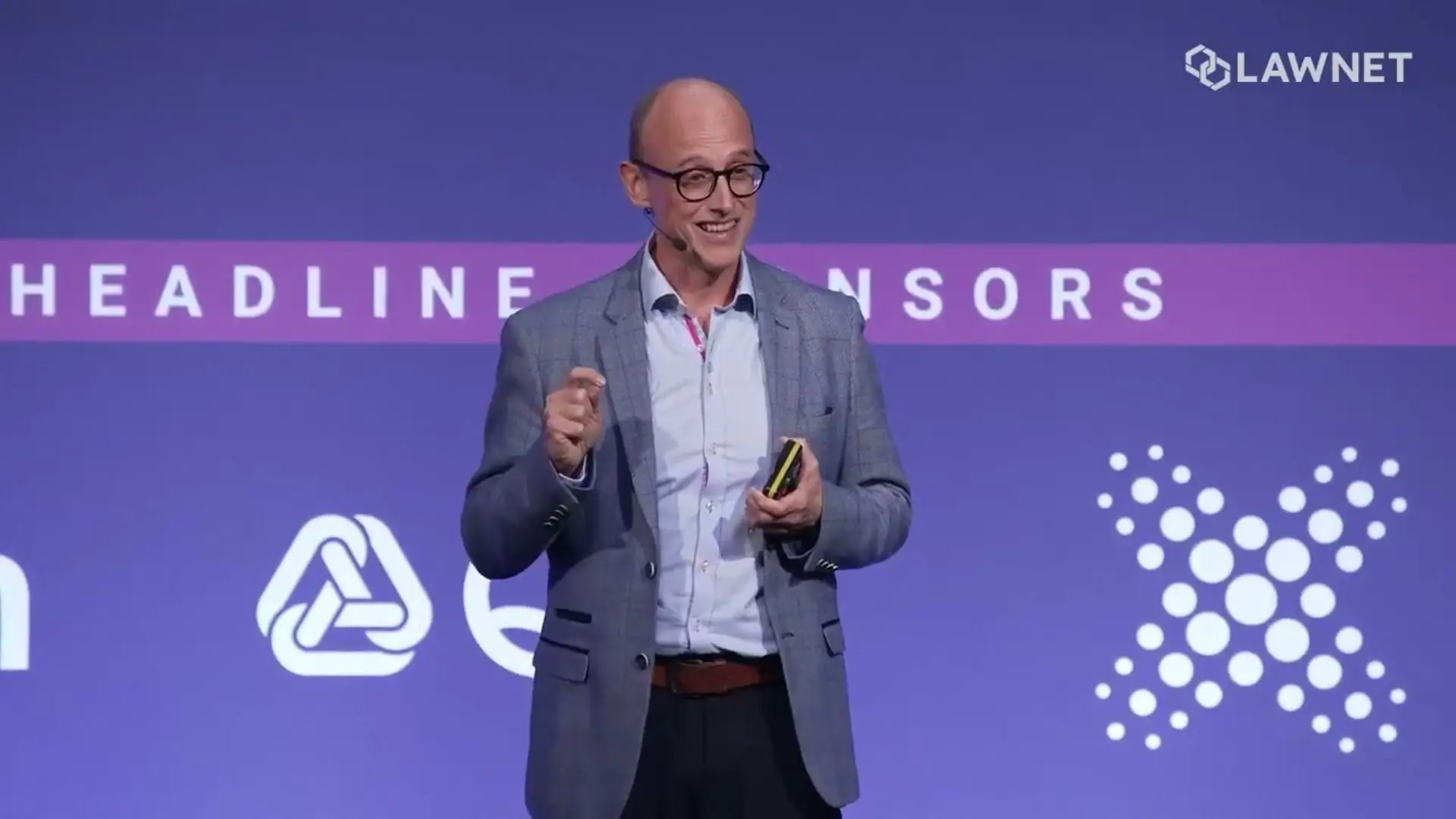
Top rated!When organisations face uncertainty, rapid change, and decisions without clear answers, Greg Orme helps leaders find clarity. As an advisor, facilitator, and author, he works with senior leaders navigating moments where existing playbooks no longer apply. His expertise lies in helping teams think more clearly, make better judgments, and move forward with confidence in complex environments. Drawing on years of experience with global organisations and deep insights into leadership in the age of AI, Greg delivers thought-provoking keynotes that equip leaders to thrive when it matters most.
5 of 5
“Greg’s presentation on The Human Edge, Generative AI and Microsoft Copilot left a lasting impression on our team. His insight, preparation and collaborative approach made the session an invaluable experience.”
Zane Freame, Global Cloud & AI Platforms Solution EngineerMicrosoft
5 of 5
“Greg has a rare ability to connect with senior audiences while delivering practical, high-impact learning. His clarity, engagement and ability to make complex ideas accessible have stayed with me long after first experiencing his work at London Business School.”
Ondrej Benes, EVP PurchasingForvia Hella Lighting
5 of 5
“Greg delivered the opening keynote at the LawNet Annual Conference to over 300 legal-sector leaders. His session on leadership and technological change was engaging, interactive, highly tailored, and received extremely positive feedback.”
Peter Riddleston, Learning & Quality DirectorLawNet
Keynote by Greg Orme:
How to lead with greater clarity, purpose and impact in a world of accelerating intelligence
Core Premise
The foundations of leadership are shifting.
For decades, expertise was currency. The leader who had the answers, held the room. But artificial intelligence doesn't just answer questions — it answers them faster, cheaper, and at a scale no individual can match.
This isn't a technology story. It's an identity story.
The leaders who will shape the next decade are those who understand that their greatest value was never their knowledge. It was always their humanity: their capacity to ask the questions that matter, to build the trust that endures, and to make the calls that no algorithm is equipped to make.
This keynote is a reorientation. Not away from AI, but towards a clearer, more powerful understanding of what human leadership is actually for.
What Senior Leaders Are Experiencing
Leaders are watching AI reshape workflows, compress decisions and democratise information that used to require years to accumulate.
The question beneath the surface isn't how do we adopt this technology? It's where do I fit in a world that increasingly doesn't need what I built my career on?
That question deserves a serious answer.
The Shift
When intelligence becomes abundant, leadership doesn't become redundant — it becomes more distinctly human.
The shift is from:
Supplying answers to shaping the right questions
Holding expertise to building the conditions for collective judgement
Managing execution to orchestrating human, social and artificial intelligence in concert
The leaders who flourish won't be those who simply delegate to machines. They'll be the ones who consciously lead across three forms of intelligence — human, social, and artificial — and know instinctively where each one belongs.
The Capability Engine — The 4Cs
Four capabilities define leadership relevance in the intelligence era. Not because they're new — but because they're now essential:
Consciousness: The self-awareness to lead with clarity and intention when the environment is noisy and the stakes are high.
Curiosity: The discipline to ask better questions in a world already saturated with answers.
Creativity: The capacity to generate ideas, connections and possibilities that lie beyond what pattern recognition alone can produce.
Collaboration: The ability to integrate human and artificial intelligence in ways that amplify both.
These aren't soft skills. They are the performance multipliers of the next era.
What Leaders Take Away
A reframed sense of where their leadership value genuinely lies — and why it matters more now, not less.
A shared language for the conversations their organisations need to have about judgement, identity and intelligence.
A clear, memorable capability model they can apply immediately.
And the kind of perspective shift that doesn't fade when the conference is over.
Keynote by Greg Orme:
Most transformation fails not because the strategy was wrong — but because the leadership conversation didn’t change.
The Premise
Organisations are extraordinarily good at communicating change. Slide decks cascade. Town halls are held. Initiatives are launched with energy and intent. And then, six months later, the behaviours are largely the same.
But culture doesn't shift when people receive better information. It shifts when leaders change the quality of the conversations they're having — and when they get precise about the specific behaviours that actually need to change.
This keynote is about the difference between announcing transformation and creating it.
What Senior Leaders Are Experiencing
The frustration is familiar. Strategy is clear but ownership is thin. People are aligned in the room and cautious outside it. Change fatigue has made teams defensive.
The instinct: Communicate harder. More clarity. Better messaging.
But the problem was never the message. It was the absence of the conversations that make meaning out of the message.
The Shifts That Actually Move Culture
This keynote identifies the specific behavioural transitions that leaders need to model, reinforce and make visible:
From communication to conversation
From alignment to ownership
From certainty to experimentation
From siloed expertise to collaborative intelligence
From control to freedom within a framework
Because behaviour, not strategy, drives results.
What Leaders Explore
Why information cascades rarely produce sustained behavioural change — and what does. How culture actually travels through organisations, not through policy but through micro-behaviours modelled daily by leaders. How to design conversations that generate clarity, accountability and psychological safety simultaneously. And how to build the conditions where teams step into responsibility rather than wait to be directed.
What Leaders Take Away
A precise set of behavioural shifts to model and reinforce — not abstract values, but concrete actions.
A shared operational language that makes culture change discussable at every level.
A clearer understanding of how their own everyday behaviour either accelerates or quietly undermines the transformation they're trying to lead.
And the tools to make conversations the engine of change rather than the announcement of it.
Keynote by Greg Orme:
How leaders build clarity, resilience, and momentum when the path is not clear.
The Premise
Uncertainty used to be a phase. Something to navigate, manage and move through until clarity returned.
It isn't a phase anymore. It's the condition.
Leaders today are expected to provide direction when the path isn't clear, maintain momentum when the destination keeps shifting, and hold their teams steady while privately carrying the same doubts everyone else has. The pressure is deeply personal.
This keynote is about how the most effective leaders in high-change environments develop the inner steadiness that makes outer leadership possible — and how that steadiness becomes contagious.
What Senior Leaders Are Experiencing
Competing priorities, compressed timelines, emotionally charged teams and sustained performance expectations — all at once, all the time.
The leaders who struggle in this reality aren't those who lack capability. They're those who haven't yet developed the internal discipline to lead from a stable centre when everything around them is moving.
And the cost isn't just personal. Anxiety is infectious. So is clarity.
The leader's inner state is always, quietly, setting the tone.
The Shift
Resilience in this context is the developed capacity to stay grounded, think clearly and act decisively when the environment is designed to pull leaders off balance.
The shift is from:
Waiting for certainty to making disciplined decisions in fog
Absorbing pressure to processing and releasing it
Reacting to events to responding from intention
Analysis paralysis to intelligent experimentation
Managing outward to leading from the inside out
This isn't positive thinking. It's behavioural discipline under pressure.
And it's learnable.
The Inner and Outer Leadership Connection
When leaders develop the capacity to regulate their own attention, emotion and perspective under pressure, something shifts outward too.
Teams become less reactive. Decision quality improves. Experimentation replaces paralysis. Purpose becomes a stabilising force rather than a framing device.
The inner shift doesn't just make leaders more resilient. It makes the organisations around them more adaptive.
What Leaders Take Away
A practical framework for making clear decisions without perfect information. Greater awareness of how their inner state directly shapes team culture and performance. Concrete behavioural adjustments that create steadiness under pressure — for themselves and those around them. A renewed sense of purpose as a leadership anchor.
And the understanding that in uncertain times, the most powerful thing a leader can offer isn't an answer. It's presence.
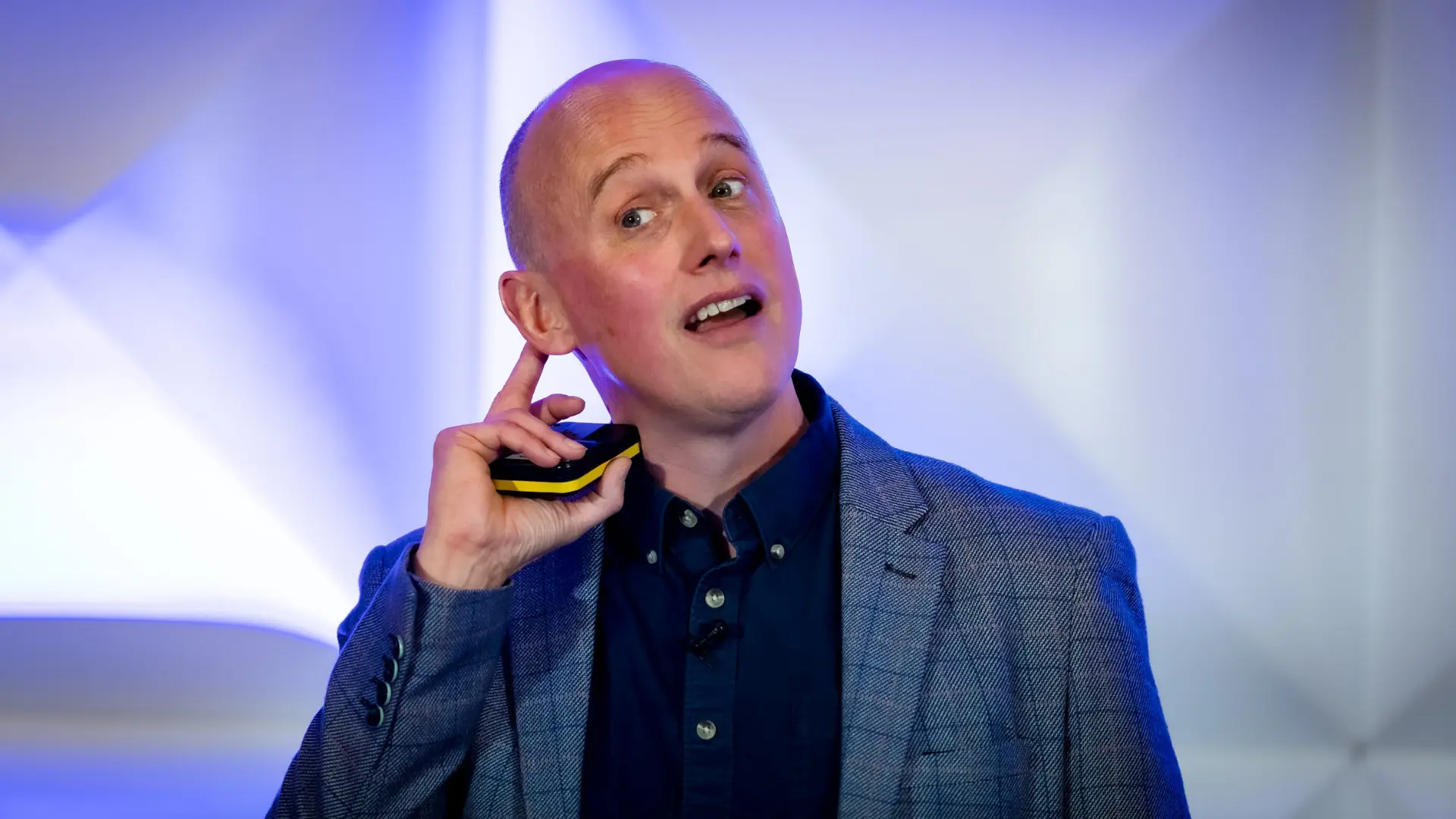
Watch Greg Orme in action