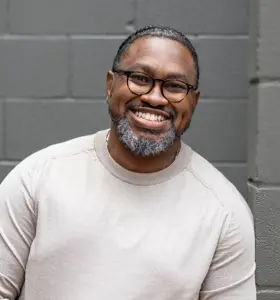
John Burrows
Leadership expert, author and educator exploring the relationships, trust and social capital that make organizations work.
Leadership expert, author and educator exploring the relationships, trust and social capital that make organizations work.
John Burrows is a leadership expert, author and educator who explores the relationships that make organizations work. Drawing on a career spanning academia, consulting and enterprise technology, he helps leaders understand leadership, negotiation, influence and the value of social capital in the workplace.
John is Senior Lecturer in Leadership at the University of Chicago’s Harris School of Public Policy, teaches Negotiations at the University of Chicago Booth School of Business, and is an Associate Fellow at Oxford University’s Saïd Business School. He works with senior executives and organizations across the United States, Europe, the Middle East and Asia, bringing academic insight together with practical experience of the challenges leaders face today.
John Burrows is a leadership expert, author and educator whose work focuses on something that can be difficult to measure but impossible for organizations to ignore: the quality of the relationships between people.
His work examines leadership, negotiation, influence and social capital, with a particular focus on how trust and human relationships enable people to turn their knowledge and capabilities into action. As AI becomes increasingly integrated into the workplace, John brings attention to the human connections that underpin collaboration, engagement and organizational performance.
John combines academic thinking with extensive practical experience. He is Senior Lecturer in Leadership at the University of Chicago’s Harris School of Public Policy, teaches Negotiations at the University of Chicago Booth School of Business, and is an Associate Fellow at Oxford University’s Saïd Business School.
John Burrows is co-author, with Seth Rachlin, of Social Capital at Work: Building the Hidden Asset that Drives Trust, Engagement, and Performance, forthcoming from Simon & Schuster in November 2026.
The book explores an asset that organizations have often overlooked. For decades, businesses have measured and managed financial capital and human capital. Yet another form of capital has been hiding in plain sight: the networks, relationships and trust that connect people and allow an organization to put its collective knowledge to work.
This perspective puts relationships at the center of organizational performance. Expertise and talent matter, but people also need the relationships that allow ideas, information and influence to move through an organization. Social capital helps explain how individuals work together, how trust develops and how knowledge is translated into coordinated action.
John brings this thinking to leaders and organizations looking to better understand the human infrastructure behind performance, engagement and effective leadership.
As AI changes the way organizations operate, questions about human relationships become increasingly important. John Burrows works with senior executives and organizations on the role that leadership, negotiation, influence and relationships play in this changing environment.
His work provides a useful lens for leaders considering how people collaborate when technology can perform a growing range of tasks. Rather than treating leadership purely as an individual capability, John’s perspective draws attention to the connections between people and the networks through which work gets done.
His areas of focus include:
Leadership and the relationships that support organizational effectiveness
Negotiation and influence in complex professional environments
Social capital, trust, engagement and performance
Networks and relationships as organizational assets
The role of human relationships in an AI-enabled workplace
These themes make John’s work particularly relevant for senior leaders and organizations navigating changes in how people communicate, collaborate and create value.
John Burrows brings experience from both the corporate and academic worlds. Before moving into academia, he was a partner at Accenture and held senior roles in the enterprise technology industry. This background gives him first-hand experience of leadership and organizational life alongside the academic perspective that now shapes his teaching and advisory work.
His academic credentials span business, leadership and ethics. John holds both a PhD and an MBA from the University of Chicago Booth School of Business, as well as a master’s degree in Practical Ethics from Oxford University.
Today, he teaches and advises leaders across the United States, Europe, the Middle East and Asia. His international work gives him experience engaging with senior executives and organizations operating across different markets and professional contexts.
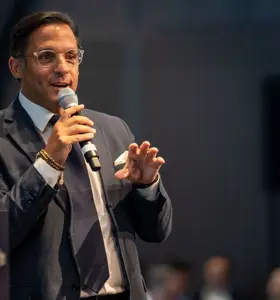
Book John Burrows for your event to explore leadership through the relationships that allow organizations and their people to perform. His speaking brings together insights from academia, executive leadership, consulting and enterprise technology, creating a perspective grounded in both research and organizational practice.
Audiences can gain a deeper understanding of social capital and why networks, relationships and trust deserve attention alongside more familiar measures of financial and human capital. John also addresses negotiation and influence, as well as the growing importance of human relationships as organizations adapt to an AI-enabled workplace.
With experience teaching at the University of Chicago and Oxford and working with senior executives around the world, John Burrows offers audiences a thoughtful and practical perspective on a fundamental question for modern organizations: how do we build the relationships and trust that allow people, knowledge and technology to work effectively together?

Keynote by John Burrows:
AI can make individuals dramatically more productive. But individual productivity and organizational performance are not the same thing.
As more work moves through AI, organizations risk automating away some of the conversations, relationships and informal exchanges through which people build trust, challenge assumptions and discover what they don’t know.
The organizations that win with AI will therefore need to manage two transformations at once: deploying powerful technology while preserving and strengthening the human networks that allow that technology to create value.
John offers leaders a practical framework for thinking about AI not simply as a technology challenge, but as an organizational and social-capital challenge.
Keynote by John Burrows:
The hardest negotiations and leadership challenges rarely arise because people lack intelligence or information. They arise because equally intelligent people can look at the same situation and see very different realities.
Drawing on behavioral science and years of teaching negotiation to executives and MBA students, John explores why perspective differences are so persistent, why they create conflict and missed opportunities, and how leaders can use them rather than simply trying to overcome them.
The result is a practical approach to negotiation, influence and decision-making that helps leaders become more curious, more persuasive and more effective when certainty is impossible.