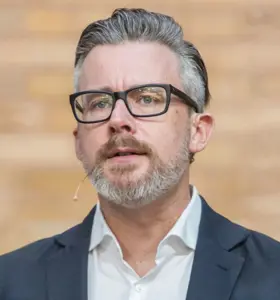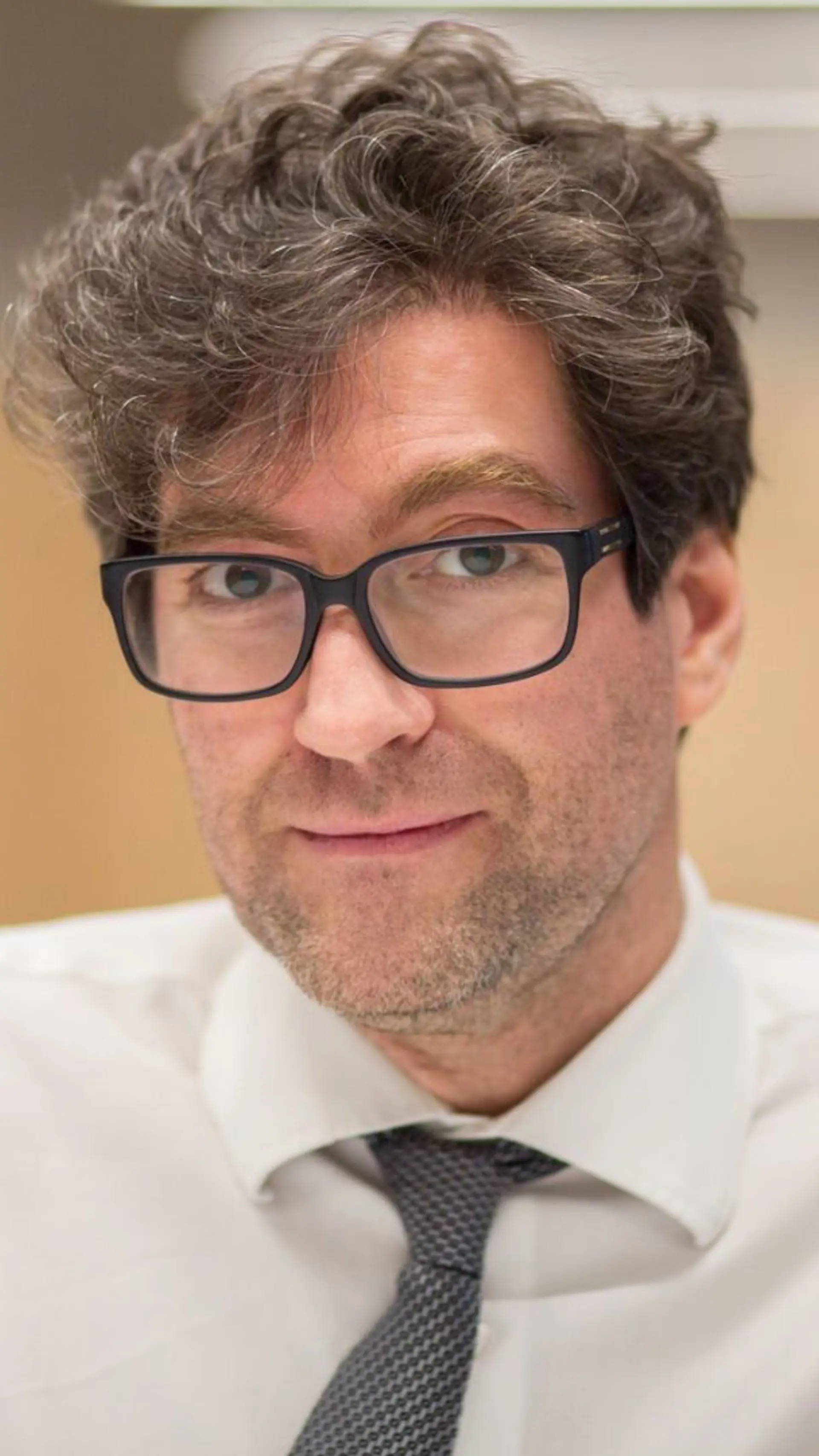
Benjamin Sutherland
Benjamin Sutherland brings global security, geopolitics, and future warfare to life through sharp analysis and vivid stories from The Economist.
Benjamin Sutherland brings global security, geopolitics, and future warfare to life through sharp analysis and vivid stories from The Economist.
Benjamin Sutherland is a writer for The Economist, covering security, defense, space, political culture, and military and intelligence systems. He combines frontline reporting with academic rigor and a storyteller’s instinct, offering audiences a grounded view of how global power, technology, and conflict interact. As a speaker, he connects geopolitics to business, leadership, and society, drawing on experience across journalism, teaching, and executive education. His talks are engaging, visual, and built on insights gathered across regions and disciplines.
Benjamin Sutherland writes for The Economist on some of the most complex issues shaping the world today: security, defense, space, political culture, and military and intelligence systems. His work translates strategic developments into clear narratives that help leaders, policymakers, and organizations understand what is changing and why it matters. When you book Benjamin Sutherland for your event, audiences gain access to analysis rooted in deep reporting and a global perspective.
Sutherland edited Modern Warfare, Intelligence and Deterrence, an Economist book examining how new weapons, emerging technologies, and evolving spycraft are reshaping the security landscape. The book was published in five editions, including an audiobook and a Chinese translation, reflecting its global relevance. For another Economist book, Megatech: Technology in 2050, he authored the chapter on the future of warfare, exploring how innovation is altering conflict, power projection, and strategic balance. These themes form the backbone of many of his keynote talks, where he explains how military change influences geopolitics, economies, and societies.
Sutherland’s talks are richly illustrated with insights from his reporting for The Economist in more than a dozen countries. He periodically serves as a Smithsonian expert, giving lectures in Europe and the Persian Gulf region on the geopolitics of those areas. Alongside his media work, he teaches as an adjunct at undergraduate and graduate level, focusing on geopolitics and international business. His courses examine how commerce can help some societies overcome violent ethnic, religious, and ideological conflicts, while in other contexts rapid economic change can heighten instability. This dual perspective allows him to speak with nuance about risk, opportunity, and unintended consequences.
In addition to geopolitics and security, Sutherland conducts MBA workshops on how to harness the power of storytelling to create compelling and authoritative business communication. He shows leaders how narrative structure, clarity, and evidence can strengthen credibility and influence. Schools where he has taught in recent years include HEC Paris, H-Farm College, Scuola Holden, the Zagreb School of Economics and Management, and the Paris School of Business. These sessions are practical, engaging, and informed by decades of editorial judgment.
Earlier in his career, Sutherland wrote for Newsweek and served as a senior editor at COLORS magazine. He has contributed to books published by Taschen and worked as a staff screenwriter with Cinemarket Productions in Paris. He also co-directed the Sundance Channel documentary Portrait of a Bookstore as an Old Man. This diverse background informs his speaking style: analytical yet accessible, intellectually rigorous yet vivid.
Geopolitics and global security trends
The future of warfare, intelligence, and deterrence
Technology, power, and conflict in the decades ahead
Political culture and regional risk
Storytelling as a strategic leadership skill
Booking Benjamin Sutherland means inviting a speaker who bridges journalism, academia, and executive education. His presentations help audiences make sense of global uncertainty, connect security trends to business and policy, and communicate with greater authority. For conferences, leadership forums, universities, and executive audiences, Benjamin Sutherland delivers clarity, depth, and perspective on a rapidly changing world.
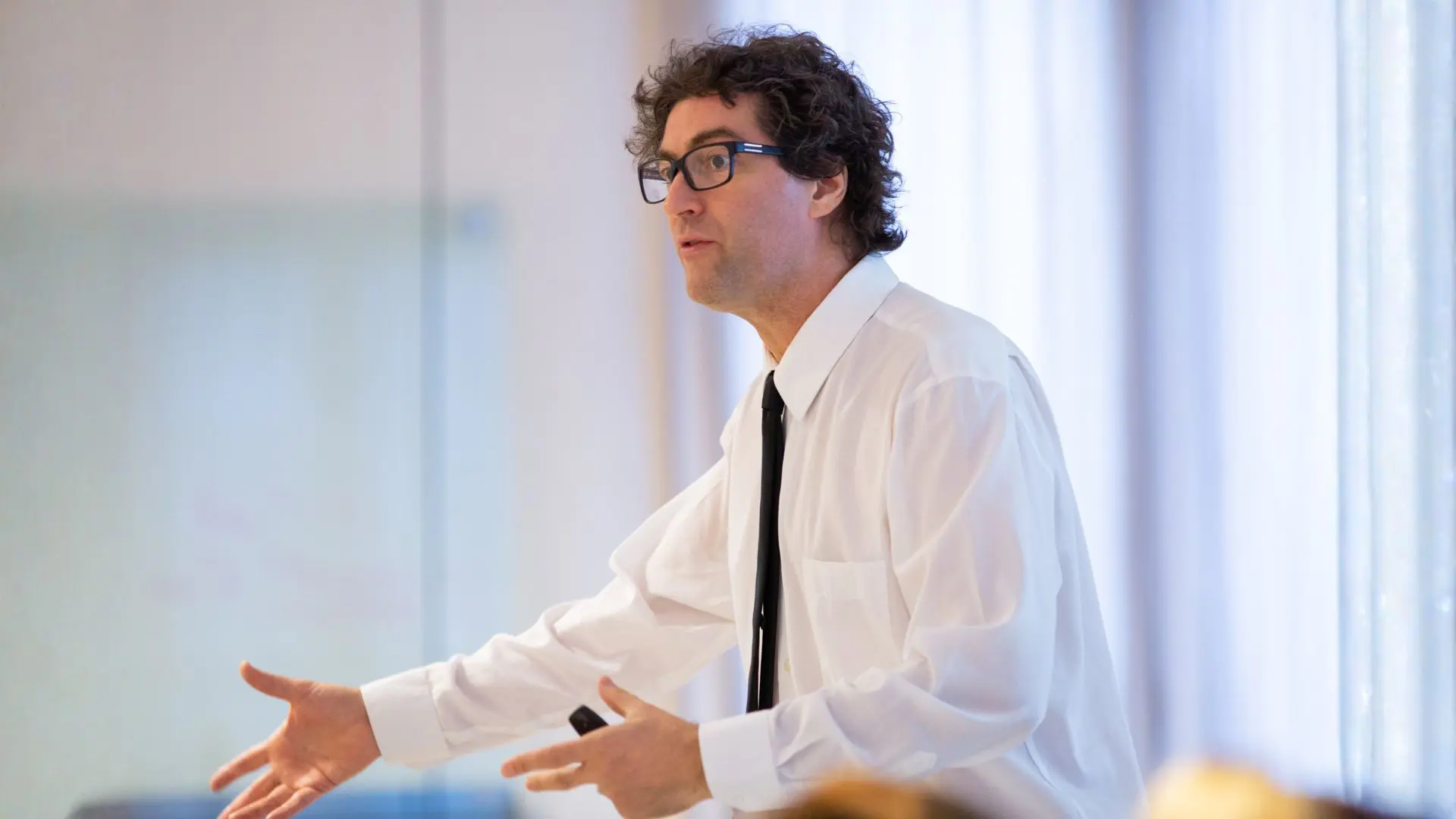
Keynote by Benjamin Sutherland:
Western liberal democracy did not emerge by accident, nor was it the product of abstract ideals alone. It was forged over centuries through conflict, compromise, institutional trial and error, and cultural evolution. This keynote traces how specific historical pressures shaped ideas about law, accountability, military power, and individual rights. By understanding how Western political culture actually formed, audiences gain clearer insight into why today’s democracies behave as they do and where their strengths and vulnerabilities now lie as the global security environment grows harsher and more competitive.
Keynote by Benjamin Sutherland:
Why do some societies reliably generate wealth, stability, and innovation, while others drift toward repression and stagnation? The answer is not popular wisdom or civic virtue alone. This keynote explores how political systems differ in the logic that governs who writes the rules, how those rules are enforced, and who benefits from them. Drawing on comparative geopolitics, it explains how legal frameworks, institutional incentives, and power distribution separate resilient democracies from authoritarian systems and why these differences matter profoundly for security, business, and global influence.
Keynote by Benjamin Sutherland:
Napoleon famously observed that geography condemns nations to certain political realities. Few places illustrate this more starkly than Ukraine. This keynote examines why Central Europe has long been a strategic hinge between empires, and how Ukraine’s position now shapes the balance of power across the continent. By placing the war in its deeper geographic and historical context, the talk explains what is truly at stake, not only for Ukraine, but for Europe’s security architecture and the broader international order.
Keynote by Benjamin Sutherland:
Russia’s behavior on the world stage often appears erratic or uniquely aggressive. In reality, it follows a strategic logic rooted in geography, history, and enduring perceptions of vulnerability. This keynote unpacks how Russia’s imperial instincts evolved, why control of territory and buffers remains central to its thinking, and how these drivers shape Moscow’s choices today. Understanding this logic does not excuse brutality, but it does clarify how Russia sees power, risk, and survival and how others misread it at their peril.
Keynote by Benjamin Sutherland:
The global balance of power is shifting, and Eurasia sits at the center of the contest. Authoritarian influence could expand across the continent in three distinct ways, each with profound consequences for global stability. This keynote explores these scenarios and asks a pressing question: what role will the West choose to play? By examining alliances, economic leverage, technological competition, and political will, the talk outlines how democratic states might still shape outcomes in a world where their dominance is no longer assured.
Keynote by Benjamin Sutherland:
Military strength is not measured by hardware alone. Culture, how societies train soldiers, empower leaders, and tolerate initiative, plays a decisive role on the battlefield. This keynote explores why forces drawn from liberal democracies often possess advantages that authoritarian militaries struggle to replicate. From decision-making under pressure to adaptability in chaos, the talk explains how political culture shapes combat performance and why these differences matter in modern conflicts.
Keynote by Benjamin Sutherland:
Commerce has long been a force for connection, but its impact on peace and conflict is uneven. In some regions, dense business networks have helped cool ethnic, ideological, and religious violence. In others, rapid economic change has fueled instability and resentment. This keynote examines how trade reshapes power structures, incentives, and identities and why the same economic forces can produce security in one place and volatility in another. It offers a nuanced view of globalization’s strategic consequences.
Keynote by Benjamin Sutherland:
The Persian Gulf remains one of the world’s most consequential energy chokepoints, even as the global economy evolves. This keynote examines why the region continues to exert outsized influence on Middle Eastern politics and global power competition. By looking at hydrocarbons, regional rivalries, external powers, and shifting alliances, the talk explains how the Gulf will shape security dynamics in the decades ahead and why instability there still reverberates far beyond the region.
Keynote by Benjamin Sutherland: