Crime refers to actions that violate laws and regulations, ranging from financial fraud and cybercrime to organized crime, violence and corruption. As society becomes increasingly digital and interconnected, understanding crime and its consequences has become more important for organizations, leaders and individuals alike. Criminal activity can impact businesses financially, damage reputations and create uncertainty for employees and customers.
At the same time, crime is closely connected to topics such as psychology, ethics, security and social responsibility. Understanding how crime develops, and how it can be prevented, helps organizations strengthen awareness, improve decision-making and create safer environments. Through real-life experiences and expert insights, keynotes on crime provide audiences with valuable perspectives on both prevention and resilience in an increasingly complex world.
Which topics do our keynotes on Crime cover?
Crime keynotes cover a broad range of themes connected to security, psychology, ethics and organizational resilience. Below are some of the central topics explored by our speakers and why they are increasingly relevant for modern organizations and society:
Cybercrime and digital security
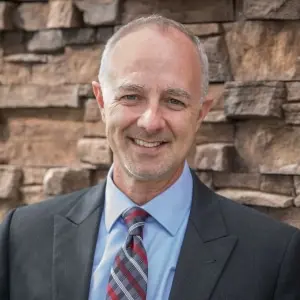
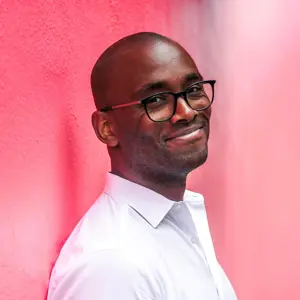
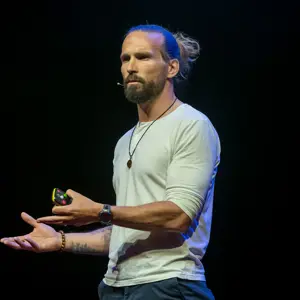
As organizations become increasingly dependent on digital systems, cybercrime and online fraud continue to pose significant challenges across industries. Keynotes on this topic explore hacking, social engineering, data protection and how businesses can strengthen digital awareness and resilience. Bastien Treptel examines how cybercriminals exploit both technological vulnerabilities and human behavior, highlighting the importance of proactive cybersecurity strategies in modern organizations. These perspectives are especially relevant for companies handling sensitive data, digital infrastructure or remote work environments.
Fraud, scams and deceptive behavior
Many modern crimes rely on manipulation, trust and psychological influence rather than technical expertise alone. Keynotes within this area focus on fraud prevention, scam awareness and understanding how deception impacts both individuals and organizations. Apollo Robbins explores how perception, distraction and behavioral patterns can be used to manipulate decision-making, offering valuable insights into awareness and human vulnerability. These discussions can help organizations strengthen critical thinking, communication and internal prevention efforts.
Ethics, accountability and organizational culture
Crime and misconduct are often closely linked to workplace culture, leadership and ethical decision-making. Keynotes on this topic examine how organizations can build environments that encourage transparency, responsibility and integrity while reducing the risk of unethical behavior. Jerome Mayne reflects on the consequences of poor ethical choices and how stronger accountability can support healthier organizational cultures and long-term trust. These insights are relevant for leaders and teams seeking to strengthen governance, communication and decision-making processes.
Crime, technology and societal change
Technology continues to reshape the way crime develops, spreads and impacts society, creating new challenges for organizations, governments and individuals alike. Keynotes on this subject explore topics such as digital influence, cyber threats, misinformation and the broader relationship between technology and criminal activity. Carl Miller examines how technological developments are transforming human behavior, politics and crime, contributing to wider discussions about security, responsibility and the future of society. These perspectives can help organizations better understand the evolving risks connected to digital transformation.
Benefits of a keynote on Crime
A keynote on crime can help organizations better understand risks, human behavior and the importance of prevention in an increasingly complex world. These keynotes provide valuable insights into topics such as cybersecurity, fraud, ethics and crisis awareness while encouraging audiences to think critically about safety, trust and responsibility.
Organizations can use these perspectives to strengthen awareness, improve communication and support stronger decision-making processes across teams and leadership levels. Crime-related keynotes also create engaging discussions by combining real-life experiences, investigative insights and practical examples. Whether the goal is prevention, education or broader organizational awareness, a keynote on crime can contribute with relevant and thought-provoking perspectives.
Other relevant keynotes within Crime
Organizations interested in crime keynotes often also explore topics such as cybersecurity, fraud, ethics, crisis management, leadership, mental health, resilience, and communication. These related topics can provide broader perspectives on security, decision-making, workplace culture and how organizations respond to challenges and uncertainty. Combining several connected keynote topics can help create a more complete understanding of prevention, awareness and organizational resilience in both public and private sectors.
Contact us today to find the keynote speaker and topic combination that best matches your event and audience.
How to Book a Speaker
Booking a speaker with A-Speakers is a simple and tailored process that ensures your event receives the perfect angle on the topic. Start by sharing your needs with us, such as event type, preferred speaker, and budget, via email or phone. We then match your requirements with the competencies of our experts and present the ideal candidate for your audience. Once the details are agreed upon, we draw up a contract and collaborate on the further planning to ensure a successful execution. After the keynote has taken place, we of course follow up and evaluate your satisfaction. Book your speaker today.
- Tell us your wishes and needs: Give us a short description of your event, and feel free to include your wishes for a topic or specific speaker, so we can advise you in the best way possible.
- Get a tailored recommendation: Our skilled speaker consultants base their suggestions on your needs and help you choose the speaker that best matches your criteria and budget.
- Formalize the agreement: Once we've found the perfect speaker for your event, we prepare a contract that both parties sign.
- Planning and execution: We support you all the way and coordinate the details together to make the event a successful experience.
- Follow-up and evaluation: After the keynote, we naturally follow up to see if the event lived up to expectations.
Contact us today to find the speaker that matches your needs and vision. Book a speaker now and take the next step toward a stronger future.