Go to main content Skip and go to the footer
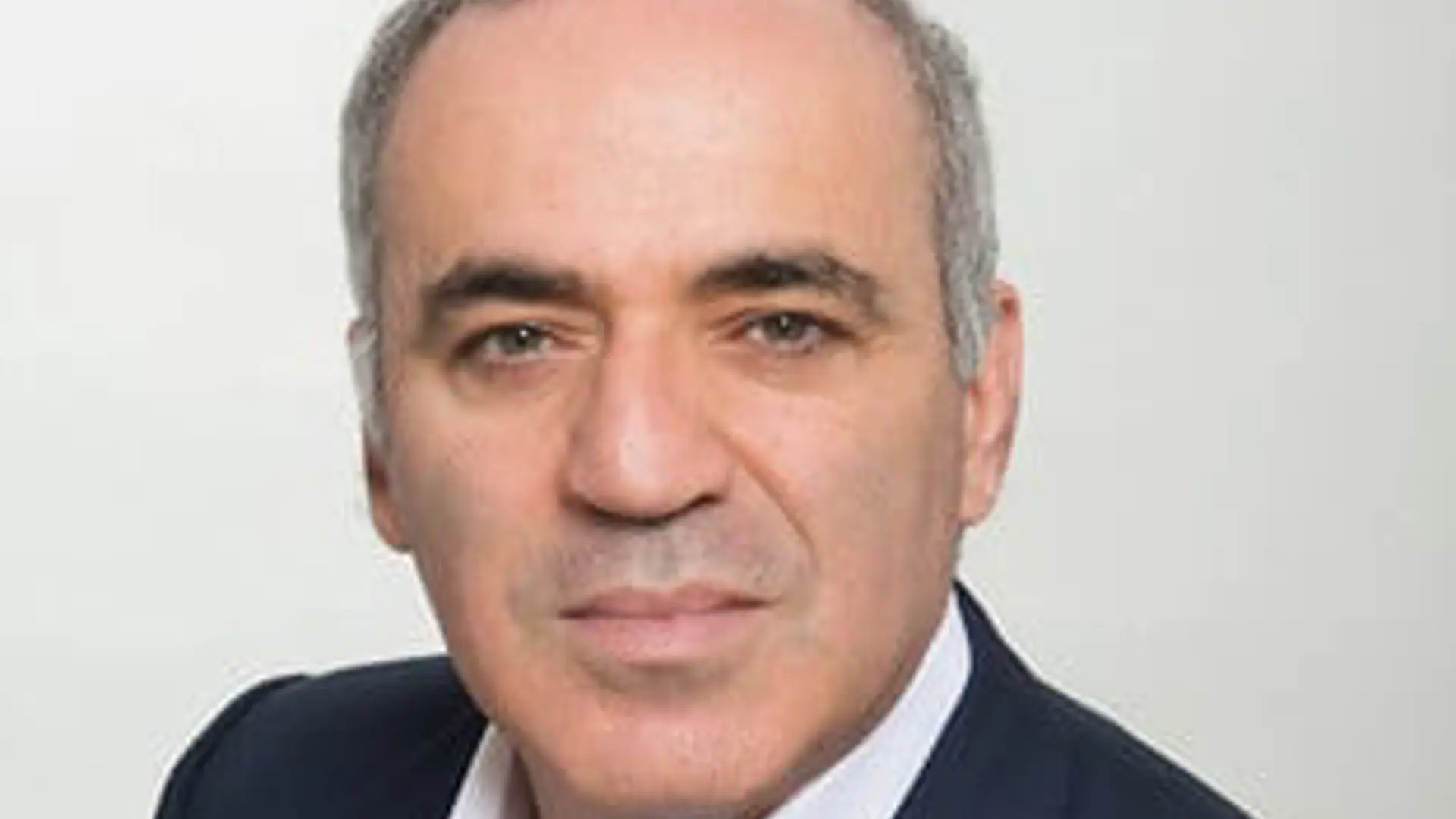
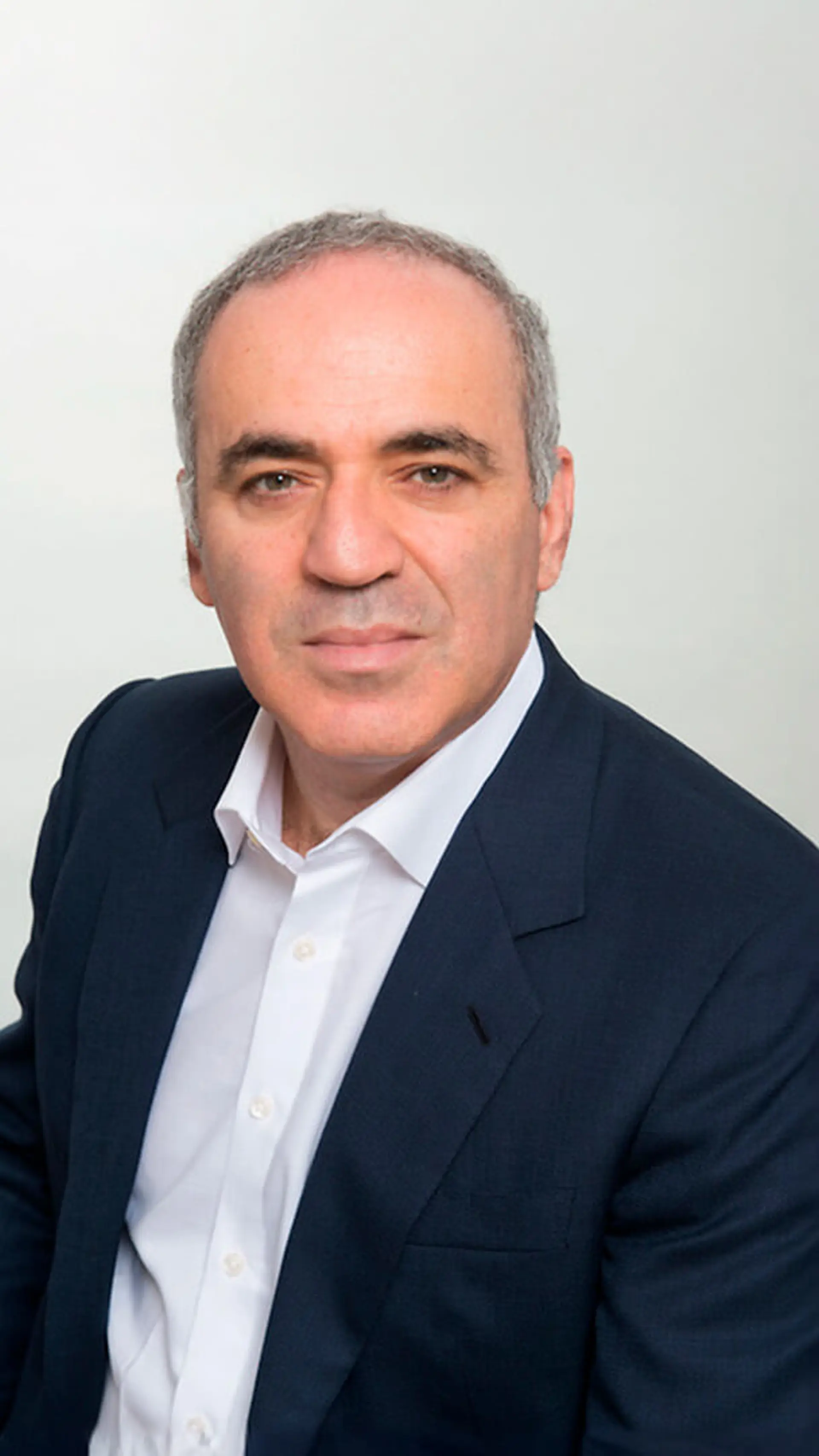
Garry Kasparov - Legendary retired chess player, today recognized as a prominent spokesman for educational, political and social reforms

Garry Kasparov

Legendary retired chess player, today recognized as a prominent spokesman for educational, political and social reforms
Request price and availability Request price and availability
USA

Non-binding request for Garry Kasparov

Book Garry

Non-binding request for Garry Kasparov

Non-binding request for Garry Kasparov

Dynamic speaker on strategy, innovation and leadership
Keynote speaker Garry Kasparov is known as a legend and the world’s #1 chess player. But in 2005 Kasparov retired from professional chess in able to lead the pro-democracy opposition against the regime of Vladimir Putin. Kasparov is also a dynamic speaker to business groups around the world on strategy, innovation and leadership.
Born in Baku, Azerbaijan, in 1963, Garry Kasparov became the under-18 chess champion of the USSR at the age of 12 and the world under-21 champion at 16. He achieved international fame as the youngest world chess champion in history in 1985 at the age of 22. He defended his title five times, including a legendary series of matches against archrival Anatoly Karpov. Kasparov also broke Bobby Fischer’s rating record in 1990 and his own peak rating record remained unbroken until 2013.

Kasparov’s outspoken nature against the Soviet authorities, gave him an early taste of opposition politics. From 1989-91 he was outspoken in opposition to the Soviet system. It was still a shock when Kasparov, then in his 20
th
year as the world’s top-ranked player, abruptly retired from competitive chess in 2005 to join the frontline of the Russian pro-democracy movement. He founded the United Civil Front and organized the Marches of Dissent to protest the repressive policies of Vladimir Putin. In 2012, Kasparov was elected to the Coordinating Council of the united opposition movement. In the same year, he was named chairman of the New York-based Human Rights Foundation, following Vaclav Havel.

Garry Kasparov also promotes the non-profit US-based Kasparov Chess Foundation that helps teach chess in education systems around the world. Now in over 3500 US schools, KCF recently launched centers in Europe and Africa with South America soon to come. Garry and his wife Daria travel frequently to promote the proven benefits of chess in education and the need for more dynamic and computer-connected methods of education in both the developing and developed worlds.

Innovation and technology have become centerpiece themes in Kasparov’s keynotes and writings. Kasparov is a pioneering figure in computer chess, most famously for his two matches against the IBM super-computer Deep Blue in 1996 and 1997. Since 2007, he has researched and collaborated with many high-tech luminaries and companies on human-machine cooperation, the economic consequences of tech stagnation, and the future of intelligent machines.

Mr. Kasparov has been a contributing editor to
The Wall Street Journal
since 1991 and is a frequent commentator on politics and human rights. He speaks frequently to business audiences around the world on innovation, strategy, and peak mental performance. Kasparov’s book “How Life Imitates Chess” on decision-making is available in over 20 languages. He is the author of two acclaimed series of chess books, “My Great Predecessors” and “Modern Chess”. He lives in New York City.
Garry Kasparov - Legendary retired chess player, today recognized as a prominent spokesman for educational, political and social reforms

Keynotes

Keynote by speaker Garry Kasparov:

Understanding Your Own Process

I’m going to put you all in the shoes of leaders and decision-makers of all kinds. From presidential candidates to CEOs and even an admiral at war. It’s not the magnitude of a decision, or the management level. It’s the process. By the time we are finished you will be aware of your own tendencies as a decision-maker. We might not be able to change the hardware we were born with, that’s our DNA, but we can definitely upgrade our software!
Request a quote: Garry Kasparov Understanding Your Own Process

Keynote by speaker Garry Kasparov:

The Big Picture on Leadership

Leadership is not about power. It is about vision, determination and courage. Courage is the inal, and often overlooked, ingredient in successful decision-making and successful innovation. We have mapped this world, yes. But with courage and will, you can create new world to explore. To lead is to decide.
Request a quote: Garry Kasparov The Big Picture on Leadership

Keynote by speaker Garry Kasparov:

Achieving Your Potential - Success is in the Mind

All the data and all the computers in the world cannot tell you which are the right questions to ask. Intuition is where it all comes together: our experience, knowledge and will. If you aren’t exploiting these human skills you are only a spectator of the data.
Request a quote: Garry Kasparov Achieving Your Potential - Success is in the Mind

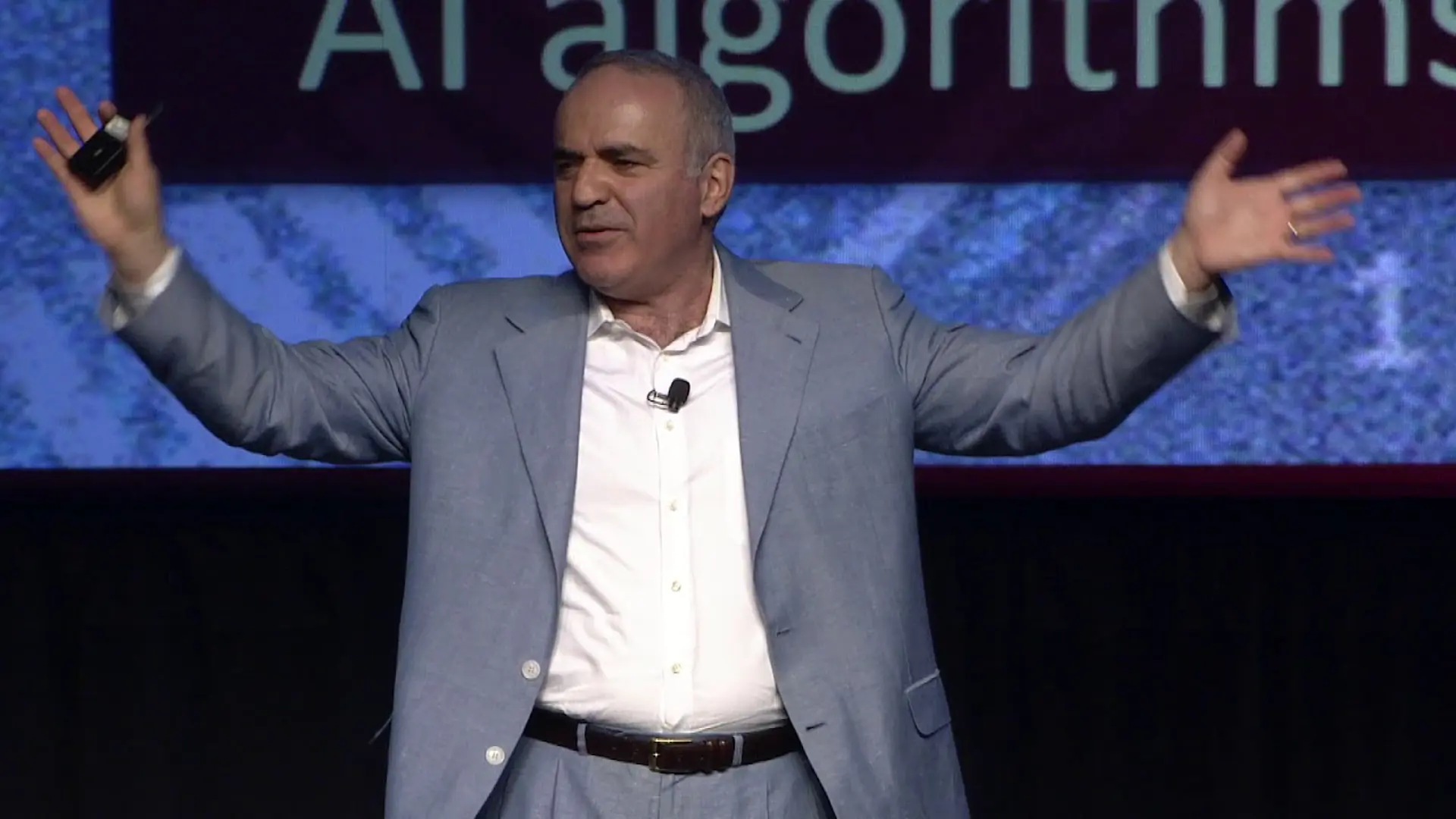
Garry Kasparov at FICO World 2018

Watch Garry Kasparov in action

Watch speaker Garry Kasparov in action

FAQ

Here are the most common questions about Garry Kasparov

What does Garry Kasparov speak about?

Garry Kasparov speaks about strategy, innovation, leadership and peak mental performance. His presentations draw on his career as the world’s top-ranked chess player and his later work in technology and human-machine cooperation.


What does Garry Kasparov teach about leadership?

Garry Kasparov’s “The Big Picture on Leadership” focuses on vision, determination and courage. His central argument is that leadership requires making decisions rather than simply holding power.

How does Garry Kasparov use chess to explain business strategy?

Garry Kasparov draws on a chess career that included becoming the youngest world champion in history in 1985 at age 22. He applies strategic thinking and decision-making principles from chess to business leadership.

What is Garry Kasparov’s connection to IBM Deep Blue?

Garry Kasparov played two historic matches against IBM’s Deep Blue supercomputer in 1996 and 1997. That experience helped make technology and human-machine cooperation central themes in his later work.

What books has Garry Kasparov written?

Garry Kasparov wrote “How Life Imitates Chess,” a book about decision-making available in more than 20 languages. He also authored the chess series “My Great Predecessors” and “Modern Chess.”

What is Garry Kasparov’s background in democracy and human rights?

Garry Kasparov retired from competitive chess in 2005 to join Russia’s pro-democracy movement. In 2012, he became chairman of the New York-based Human Rights Foundation.

What does Garry Kasparov do through the Kasparov Chess Foundation?

Garry Kasparov promotes chess in education through the nonprofit Kasparov Chess Foundation. The foundation’s programs have reached more than 3,500 U.S. schools and expanded into Europe and Africa.

What media experience does Garry Kasparov have?

Garry Kasparov has been a contributing editor to The Wall Street Journal since 1991. He is also a frequent commentator on politics and human rights.

Who are Garry Kasparov’s keynotes suitable for?

Garry Kasparov’s keynotes are relevant for business leaders and audiences focused on strategy, innovatioHow much does a keynote cost?n, technology and decision-making. His profile notes that he speaks frequently to business audiences around the world.

How much does a keynote cost?

The short answer is: It depends on the event and the scope of the individual engagement.

The fee varies depending on factors such as the speaker, duration, location, language, format and scope of the event. Contact us with some information about your requirements, and we will quickly provide a non-binding quote. Contact us here.

Non-binding request for Garry Kasparov

Need help?

Phone: +1 347 223 5128

Email: [email protected]