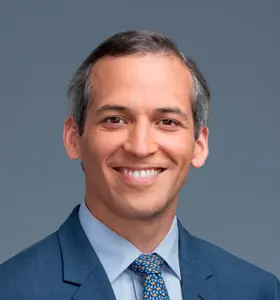
Gordon Chang
Gordon Chang is a leading voice on China, global power shifts, and security, known for sharp analysis shaped by decades of on-the-ground experience.
Gordon Chang is a leading voice on China, global power shifts, and security, known for sharp analysis shaped by decades of on-the-ground experience.
Gordon G. Chang is one of the most prominent commentators on China, East Asia, and global security. As an author, columnist, and former international lawyer, he brings a rare combination of firsthand experience and sharp analytical depth to the world stage. Having lived and worked in China and Hong Kong for almost twenty years, Chang has observed political, economic, and legal developments from the inside. Today, he is widely known for his clear positions on U.S., China relations, North Korea, and the shifting balance of global power. When you book Gordon Chang for your event, you invite a speaker who challenges audiences to rethink long-held assumptions about the world’s most consequential geopolitical actors.
Keynote by Gordon Chang:
China’s rise is no longer a future scenario, it is a defining force reshaping global power, economics, and diplomacy in real time. In this keynote, the speaker explores how China is challenging the post–Cold War international order and what this transformation means for governments, businesses, and institutions worldwide.
Drawing on geopolitical analysis, economic trends, and strategic case studies, the keynote examines China’s evolving role in global governance, trade, technology, and security. It unpacks how Beijing’s ambitions intersect and increasingly collide with Western norms, alliances, and values.
This session provides audiences with a clear framework for understanding the scale of change underway, cutting through headlines to explain why China’s actions matter far beyond Asia and how global actors must adapt to a world where power is no longer unipolar.
Keynote by Gordon Chang:
For decades, global supply chains were built on efficiency, cost reduction, and interdependence. Today, they are being redefined by geopolitics, conflict, sanctions, and strategic rivalry with China at the center of this shift. This keynote examines how deglobalization is transforming the way goods, data, and resources move around the world.
From semiconductor shortages to energy security and critical raw materials, the speaker analyzes how political tensions and economic nationalism are forcing companies and governments to rethink resilience over efficiency. Particular attention is given to China’s role as both an indispensable manufacturing hub and a strategic vulnerability.
Designed for executives and decision-makers, this keynote offers insight into risk management, diversification, and strategic planning in an increasingly fragmented global economy, where supply chains are no longer just operational issues, but matters of national and corporate security.
Keynote by Gordon Chang:
China’s economic slowdown has become a global concern, not only for Beijing, but for markets, industries, and governments worldwide. In this keynote, the speaker unpacks the structural challenges facing the Chinese economy, from property-sector instability and demographic decline to rising debt and reduced investor confidence.
Going beyond surface-level analysis, the keynote explains why China’s economic health matters far beyond its borders. Audiences gain insight into how a slowing China affects global growth, commodity markets, inflation, supply chains, and geopolitical stability.
This session is essential for leaders who need to understand the broader implications of China’s economic trajectory and why developments inside China increasingly shape decisions made in boardrooms, ministries, and financial institutions around the world.
Keynote by Gordon Chang:
China’s global ambitions extend far beyond Asia. Through diplomacy, infrastructure investment, energy partnerships, and strategic mediation, Beijing is steadily expanding its influence across Europe, the Middle East, and the Global South. This keynote explores the logic and long-term objectives behind China’s global strategy.
The speaker examines initiatives such as the Belt and Road Initiative, China’s role in Middle Eastern diplomacy, and its evolving relationship with Europe amid growing transatlantic tensions. The keynote highlights how China positions itself as an alternative partner to the West, economically, politically, and ideologically.
Audiences gain a clearer understanding of how China leverages trade, investment, and diplomacy to reshape regional balances of power and what this means for Western alliances, regional stability, and global competition.
Keynote by Gordon Chang:
Few questions are as consequential or as misunderstood, as China’s future relationship with conflict. In this keynote, the speaker addresses the critical issue of whether China’s rise will lead to confrontation or coexistence, with particular focus on Taiwan, the South China Sea, and China’s military modernization.
Combining strategic analysis with historical context, the keynote explores China’s security priorities, risk tolerance, and red lines. It also examines how miscalculation, domestic pressure, or external shocks could escalate tensions, even when none of the major actors actively seek war.
This keynote equips audiences with a sober, balanced understanding of the risks and realities shaping global security, offering insight into one of the most important questions facing the international community today.