Non-binding request for Pasha Marlowe
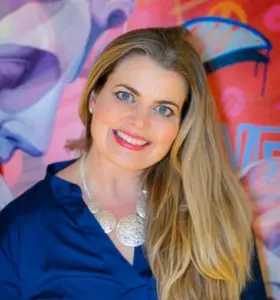
Pasha Marlowe
Pasha Marlowe is a keynote speaker and therapist helping leaders create sustainable cultures of wellbeing and neuroinclusion.
Prefer to talk? Call +1 347 223 5128
5.00 of 5
Top rated!
Pasha Marlowe is a keynote speaker and therapist helping leaders create sustainable cultures of wellbeing and neuroinclusion.
Prefer to talk? Call +1 347 223 5128
5.00 of 5
Top rated!Pasha Marlowe is CEO of Neurobelonging, a keynote speaker, three-time author and masters-level marriage and family therapist with more than 30 years of mental health experience. Specializing in neurodiversity, she helps leaders create sustainable cultures of wellbeing and neuroinclusion. Combining clinical expertise with lived experience, Pasha delivers deeply human presentations with practical strategies audiences can bring into their teams, organizations and everyday leadership.
Pasha Marlowe brings more than three decades of “boots on the ground” mental health experience to the stage. As CEO of Neurobelonging, a keynote speaker, facilitator, coach and masters-level marriage and family therapist, she has dedicated her career to helping people and organizations understand wellbeing, neurodiversity and what it takes to build environments where different minds and bodies can thrive.
Her mission is clear: to help leaders create sustainable cultures of wellbeing and ensure that all minds and bodies have an equitable opportunity to thrive.
Pasha specializes in neurodiversity and is also certified by AANE, the Association for Autism and Neurodiversity. Her expertise is complemented by lived experience as a multiply-neurodivergent person who has raised and launched three humans. This combination gives her work a perspective that is deeply personal while remaining grounded in decades of professional and clinical experience.
When you book Pasha Marlowe, audiences encounter a speaker who can connect the individual human experience with the wider systems, leadership practices and organizational cultures surrounding it.
What does it actually mean to create a workplace where different minds can thrive? Pasha approaches neuroinclusive leadership as something that reaches beyond awareness and into everyday culture, wellbeing and organizational practice.
Her presentations explore how leaders can create environments that recognize different ways of thinking, communicating and experiencing the world. She brings a global, culturally responsive and intersectional lens to this work, helping audiences understand neuroinclusion within a wider organizational and human context.
Rather than separating personal wellbeing from organizational transformation, Pasha connects the two. Her work invites leaders to consider how cultures and systems shape people's ability to participate, contribute and thrive.
Audiences leave with practical and actionable strategies grounded in more than 30 years of real-world experience. This makes her presentations relevant for leaders and organizations that want to translate conversations about neurodiversity and wellbeing into meaningful change.
Pasha Marlowe brings together clinical expertise, systemic thinking, lived experience and more than three decades of working directly with people. Her background gives audiences a perspective on neurodiversity and wellbeing that connects personal experiences with the realities of leadership and organizational culture.
Her experience includes:
This combination allows Pasha to speak about complex subjects with vulnerability and humanity while giving audiences something tangible to take back into their professional lives. Her presentations create impact on multiple levels, encouraging audiences to reflect personally, think differently about leadership and identify practical strategies they can put into action.
This balance is reflected in the feedback she receives most frequently from audiences: “Your presentation was both personally and professionally impactful to me.”
Alongside her speaking, facilitation and clinical work, Pasha Marlowe is a three-time author. She is the author of Creating Cultures of Neuroinclusion and a contributing author to Neurodiversity in Clinical Psychotherapy and Counseling.
Her writing reflects the same focus that defines her work with organizations: creating a deeper understanding of neurodiversity while helping people turn that understanding into changes in culture and practice.
As a facilitator, Pasha partners with organizations internationally to drive transformation at the systemic level. Her global and culturally responsive perspective enables her to work with audiences and organizations while remaining attentive to intersectionality and the different contexts in which wellbeing and neuroinclusion are experienced.
Pasha's presentations are deeply human. She brings vulnerability into the room without losing sight of practical application, giving audiences an opportunity to connect with the subject personally while examining what needs to change professionally and systemically.
Her focus on sustainable cultures of wellbeing recognizes that lasting change requires more than a single initiative or conversation. It involves creating environments in which people have an equitable opportunity to participate, contribute and thrive.
For organizations navigating conversations around wellbeing, neurodiversity and inclusive leadership, Pasha offers decades of experience alongside an approach rooted in humanity and action. Her work helps audiences see neuroinclusion through a broader lens and consider what meaningful change can look like in their own teams and organizations.
Book Pasha Marlowe for your event to give your audience an engaging and actionable exploration of neuroinclusive leadership and wellbeing, shaped by clinical expertise, lived experience and more than three decades of working directly with people.
5 of 5
Pasha<br>'<br>s intergenerational leadership work is the vehicle<br>that drives organizations to success as they inclusively<br>attract, retain, and support neurodiverse talent.
FRANKIE RUSSOInnovation Expert
5 of 5
Pasha brings an unmatched level of simplicity, clarity and<br>light-heartedness to the complex imperative of building<br>belonging in our intergenerational workforce.
CHRIS ROLLINSRipple Effect Leadership
5 of 5
With an abundance of energy, a unique personality, and a talent<br>for innovation, Pasha stands as the dynamic speaker you require<br>to breathe new life into your workplace or campus culture.
CULLEN T. MULROONEYDiversity Director
Keynote by Pasha Marlowe:
Leaders require emotional and relational intelligence to effectively communicate with and lead their teams. As much as they need to understand their own nervous system and how to regulate their emotions, it is important that leaders learn to be co-regulators as well. Leaders who are the “calm in the storm”, especially when times are challenging or conflict is in the room, can influence whether team members feel safe and connected or uncertain and depleted.
Wellbeing and nervous system regulation is not separate from or in competition with performance-they are foundations for sustainable capacity. When leaders learn to co-regulate rather than unintentionally amplify stress, they create workspaces where teams can access more focus, energy, and connection.
This keynote explores leadership and wellbeing through the lens of nervous system awareness, mental health, and neurodiversity (the diversity of nervous systems). The strategies and tools presented will help leaders cultivate teams where wellbeing, capacity, and performance are sustainable and co-regulation is a daily practice.
Objectives:
Keynote by Pasha Marlowe:
Why are so many people identifying as neurodivergent and how does that impact the workplace?
Neurodivergent is a socio-political identity, not a diagnosis, that can be used by anyone who diverges from neuronormativity, or society’s idea of “normal” or “ideal”-that’s most people! Over time, more people will identify as neurodivergent and disabled (apparent and non- apparent) because the world is becoming more disabling to our nervous systems and feels less aligned with our innateness.
In fact, 53% of Gen Z and Millennials identify as neurodivergent and/or disabled and 38% say they are actively seeking neurodiversity-affirming work and campus experiences. Organizations and institutions that prioritize neuroinclusion and rise to meet the needs of the people they serve, will most certainly have a competitive advantage.
Neurodiversity is the diversity of all minds and nervous systems, so every group, team, and community is neurodiverse! Neuroinclusive leaders that respect different functioning styles are imperative as we need to build cultures where all minds and bodies can thrive.
The key to creating cultures of neuroinclusion is to understand that every human has access, support, and sensory needs-some more than others. Effective leaders recognize needs, proactively build accessible spaces, remove barriers to success and belonging, practice co- regulation, and use inclusive language.
In this personally and professionally impactful and interactive presentation, Pasha clearly defines key terms and the important paradigm shifts of the neurodiversity movement. She offers an actionable R.E.S.P.E.C.T. framework for leaders and educators to use in order to meet the access, support, and sensory needs of their students, teams, and communities.
Participants will leave with:
Keynote by Pasha Marlowe:
How different might the college experience be if students, faculty, and campus leaders understood not only how to regulate their nervous systems, but how to help others do the same?
Campuses are places of growth, challenge, and transition. They are also often environments where exhaustion, anxiety, and disconnection become difficult to manage-especially during times of crisis or conflict.
Students, faculty, and staff may know what they “should do” to manage emotions, relationships, and school responsibilities, but they can still find themselves stuck in patterns of shutdown and overwhelm. Helping others regulate when they are struggling to regulate themselves can feel impossible.
Co-regulation does not mean fixing or taking responsibility for another person’s wellbeing. It means creating conditions and establishing grounding practices that support psychological safety, agency, and respect for differing lived experiences.
This keynote explores campus relationships through the lens of wellbeing, mental health, and neurodiversity (the diversity of nervous systems) and introduces the idea that effective leaders are co-regulators, the “calm in the storm”. Leaders with nervous system awareness and tools to create a safe, calm, and grounded environment, even during a crisis or conflict, influence how everyone involved experiences a situation. Neuroinclusive leaders respect different nervous systems and co-regulate with different needs in mind.
Participants will learn:
Watch Pasha Marlowe in action!